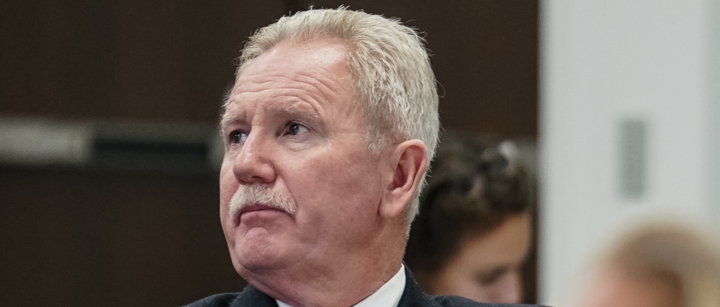
Hezbollah Leader Calls for Lebanon’s Government to Withdraw from Negotiations with Israel

As tensions escalate in the Middle East, the dynamics between Lebanon and Israel remain a focal point of concern, especially in light of the planned talks in Washington. Hezbollah’s leadership is urging the Lebanese government to prioritize national sovereignty over negotiations perceived as undermining its defense capabilities. This moment underscores a broader narrative of resilience and resistance amid external pressures, reflecting the complex interplay of politics and military strategy in the region.
Hezbollah leader Naim Qassem recently spoke out against an upcoming meeting between the Lebanese government and Israel in the United States, labeling such efforts as “futile” amidst increasing Israeli hostilities against Lebanon. In a televised address, Qassem urged the Lebanese government to adopt “a historic and heroic stance” by abstaining from the proposed discussions.
Scheduled for Tuesday, the meeting will involve Lebanese and Israeli ambassadors in Washington, D.C., with aims of establishing direct negotiations between the two nations. Qassem asserted that the talks are a tactical maneuver designed to pressure Hezbollah into disarming. He pointed out that Israeli Prime Minister Benjamin Netanyahu has openly stated the negotiations’ primary goal is Hezbollah’s disarmament, questioning the wisdom of pursuing talks with such an explicit agenda against Lebanese interests.
The backdrop to these developments includes an intensification of Israeli assaults on Lebanon, which escalated significantly in early March following Hezbollah’s retaliatory rocket fire. This escalation followed the assassination of Iran’s Supreme Leader Ayatollah Ali Khamenei by the U.S. and Israel, igniting further conflict in the region. While a ceasefire had been in place since November 2024, reports indicate that Israel continued to conduct regular attacks within Lebanon, resulting in considerable casualties and displacement.
Hezbollah’s March 2 attack was portrayed as a direct response to these provocations. In the subsequent operations by Israeli forces, more than 2,055 individuals in Lebanon, including children and medical personnel, have lost their lives, while over 6,500 have sustained injuries, leading to the displacement of approximately 1.2 million people.
Despite the rising hostilities, Lebanese authorities emphasize the need for an immediate ceasefire. In contrast, Israel’s focus appears to be on initiating formal peace talks that place disarmament as a primary condition, neglecting discussions around a ceasefire or a withdrawal of troops from southern Lebanon. Netanyahu, expressing a desire for a lasting peace, stated over the weekend the necessity for dismantling Hezbollah’s military capabilities.
Qassem criticized the proposed talks as requiring a consensus among Lebanese leadership to transition from a position of non-negotiation to engagement with Israel, calling this a “free concession” to both Israel and the United States. His remarks followed significant protests in Beirut over the weekend, where demonstrators accused Prime Minister Nawaf Salam of betrayal for considering negotiations while Israel persists in its military campaign against Lebanon.
As the Israeli military reported on Monday that its forces had successfully encircled the strategically important town of Bint Jbeil, Qassem emphasized that northern Israeli communities would not find safety, underscoring Hezbollah’s commitment to counter any incursions. He also voiced concern over perceived betrayals by the Lebanese government, alleging that the categorization of Hezbollah’s military actions as illegal was a stab in the back during a critical time.
Without acknowledging Hezbollah’s military activities as legitimate defense measures, Qassem argued that external pressures from Israel and the U.S. seeking to fortify the Lebanese army for the purpose of disarming the group were unrealistic and would not be sustainable in the current environment.
#MiddleEastNews #PoliticsNews