New York bill would tax luxury second homes outside of NYC – Times Union
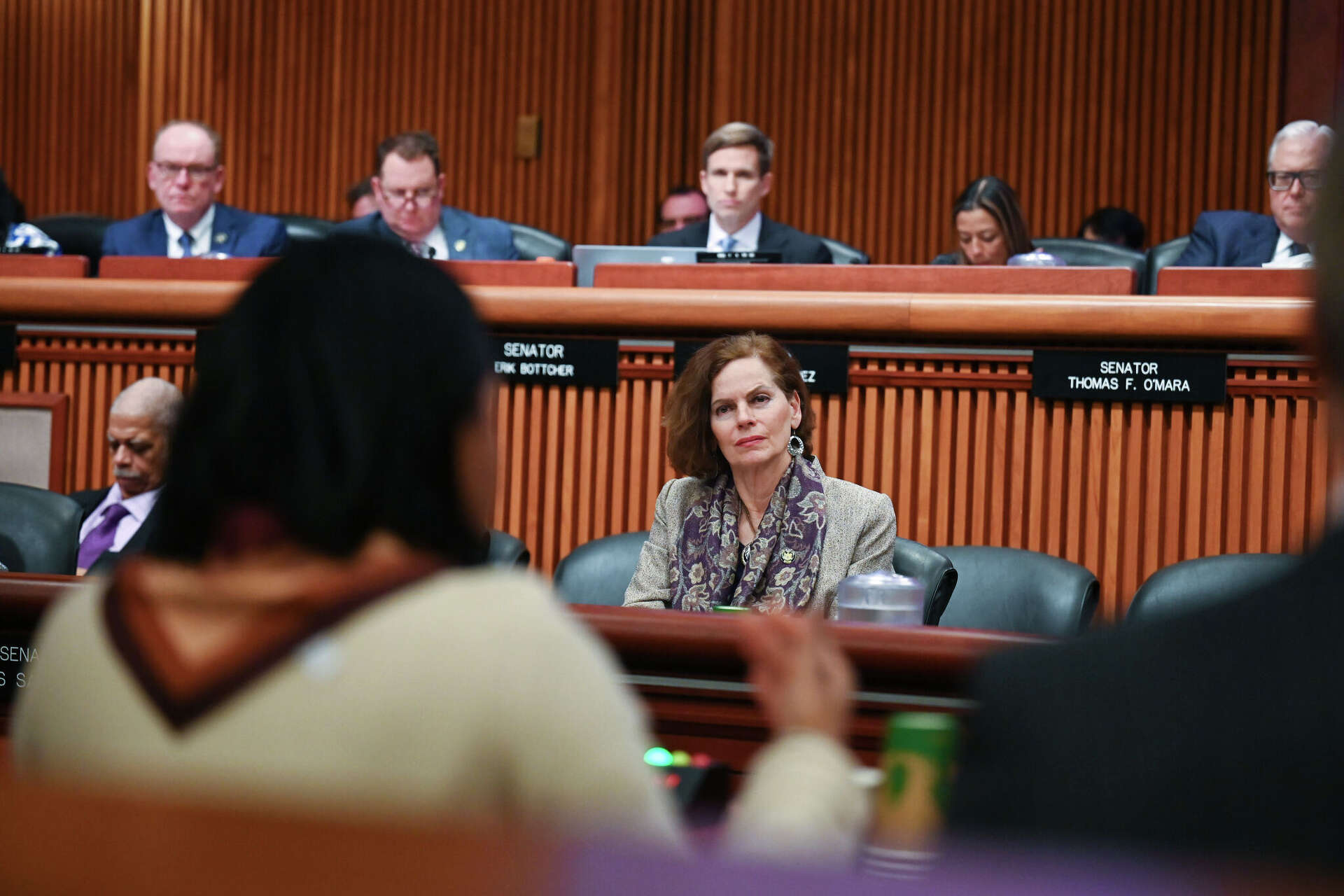
State Sen. Patricia Fahy, center, listens to testimony from Albany Mayor Dorcy Applyrs, left, during a budget hearing this session. Fahy has proposed an opt-in luxury second-home tax outside of New York City.
ALBANY — In parts of the Adirondacks, nearly one in five homes sit empty, a vacancy trend that local officials say is hollowing out once year-round communities into seasonal ghost towns.
Now, state Sen. Patricia Fahy, a Democrat who represents a large portion of the Capital Region, wants to take a page from New York City’s playbook by introducing legislation that would let municipalities across the state impose an opt-in tax on luxury second homes and investor-owned properties worth more than $5 million.
Article continues below this ad
Fahy’s proposal comes weeks after Gov. Kathy Hochul announced she will back a new tax on ultra-wealthy second homeowners in New York City, reviving a long-stalled “pied-à-terre” tax aimed at helping close the city’s multi-billion-dollar budget gap. The tax is being discussed as part of New York’s $260 billion budget, which was due April 1 — a deadline that was extended for the eighth time this week.
Hochul said the proposed New York City tax would impose an annual surcharge on residential properties that are within the five boroughs and not used as primary residences. According to the governor’s office, the tax would be imposed based on a property’s value as determined by the city tax assessor. Hochul said the tax would allow the city to levy a tax surcharge that would generate at least $500 million in recurring annual revenue.
Fahy’s bill would aim to help cash-strapped upstate municipalities facing severe budget deficits driven by rising costs, stagnating revenue and delayed state aid. Rochester is staring down a $131 million deficit, while Albany’s 2026 shortfall stands at $15 million.
Revenue would be split between localities and the state’s Aid and Incentives to Municipalities funding, New York’s main funding stream to support local essential services. Half of the new funding would stay with the municipality and the other would go to the state to support local governments outside of New York City.
Article continues below this ad
Fahy’s bill would apply a tax to residential homes that are not the primary residence of the owner or a family member, are not rented as someone else’s primary residence, and have a five-year average property value of $5 million.
The owner must have their primary residence outside the municipality where the property is located. Municipalities can impose an annual tax between 0.5% and 4% of the property’s average value, including graduated rates.
“Cities, towns, and villages outside of New York City have seen AIM funding remain largely unchanged in the last decade or more, even as local governments face rising costs and an exodus of young people and families who have been priced out of the communities they grew up in,” Fahy said. “For too long, these properties have contributed to a hollowing out of communities Upstate, in Long Island, the Adirondacks, Finger Lakes, and across New York State, in some instances, by turning them into part-time ghost towns.”
When asked about the proposal earlier this week, Senate Majority Leader Andrea Stewart-Cousins said that she had yet to speak to members of her party. “But for me personally, I think it’s worth more conversation,” she said.
Article continues below this ad
Assembly Speaker Carl E. Heastie also had not spoken to members of his chamber about the tax, but appeared warm to the idea.
“Me, personally, I would be open to other places looking at the pied-à-terre tax,” he said. (The term is French for “foothold,” and is a real estate term for an apartment or other small property owned as a second residence.)
State Sen. Michelle Hinchey, who represents a large portion of the Hudson Valley and Catskills region, told the Times Union earlier this month that she supports efforts to address the impact of luxury second homes and short-term rentals in New York City.
Hinchey described how an influx of wealthier buyers during and after the pandemic drove up housing prices in the Hudson Valley, with homes often selling sight unseen and far above asking price, pricing out young families, workers and seniors.
Article continues below this ad
She said that many homes have been converted into vacation rentals or part-time residences, reducing the supply of the housing for full-time residents and making it harder for local businesses to find workers.
While she stopped short of endorsing a statewide pied-à-terre tax, she said lawmakers are exploring “not dissimilar” policies to ease affordability pressures and support year-round communities.
Hinchey pointed to steps she has already supported, including a statewide short-term rental registry law and a new Ulster County bill she is carrying that would shift some property tax burden from full-time residents onto second homeowners and rental properties, giving permanent residents about a 10% property tax break.
State Sen. James Skoufis, who represents a significant portion of Orange County, acknowledged concerns about budget pressures in upstate and the Hudson Valley. However, he said that a statewide pied-à-terre tax may not translate well outside New York City because few municipalities have enough ultra-luxury properties to generate meaningful revenue.
Article continues below this ad
“You’ll find a very small handful here or there, but nothing that if there was some tax imposed could close a meaningful budget gap in an upstate municipality,” Skoufis said in an interview earlier this month.
Instead, he said each locality will likely need different fiscal solutions, including direct state aid or local revenue measures, such as those proposed in the Senate’s budget proposal.