Accelerating scientific discovery with Co-Scientist – Nature
Abstract
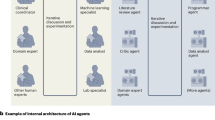
Scientific discovery is driven by scientists generating novel hypotheses for complex problems that undergo rigorous experimental validation. To augment this process, we introduce Co-Scientist, a multi-agent AI system built on Gemini for structured scientific thinking and hypothesis generation. Co-Scientist aims to help scientists discover new original knowledge. Conditioned on their research objectives and prior scientific evidence, it formulates demonstrably novel research hypotheses for experimental verification. The system’s design involves agents continuously generating, critiquing and refining hypotheses accelerated by scaling test-time compute. Key contributions include: (1) a multi-agent architecture with an asynchronous task execution framework for flexible compute scaling; (2) a tournament evolution process for self-improving hypotheses generation. Automated evaluations show continued benefits of test-time compute scaling, improving hypothesis quality over time. While general purpose, we focus the validation in three biomedical applications: drug repurposing, novel target discovery 1, and explaining mechanisms of anti-microbial resistance 2. Specifically, Co-Scientist helped identify new drug repurposing candidates and synergistic combination therapies for acute myeloid leukemia, which were validated through in vitro experiments. These real-world validations demonstrate the potential of Co-Scientist to accelerate scientific discovery and usher in an era of AI empowered scientists.
Author information
Authors and Affiliations
Corresponding authors
Supplementary information
Supplementary Information (download PDF )
This file contains Supplementary Notes 1-12, Supplementary Figures 1-9, Supplementary Tables 1-4, and Supplementary References.
Rights and permissions
About this article
Cite this article
Gottweis, J., Weng, WH., Daryin, A. et al. Accelerating scientific discovery with Co-Scientist.
Nature (2026). https://doi.org/10.1038/s41586-026-10644-y
-
Received: 20 March 2025
-
Accepted: 11 May 2026
-
Published: 19 May 2026
-
DOI: https://doi.org/10.1038/s41586-026-10644-y