
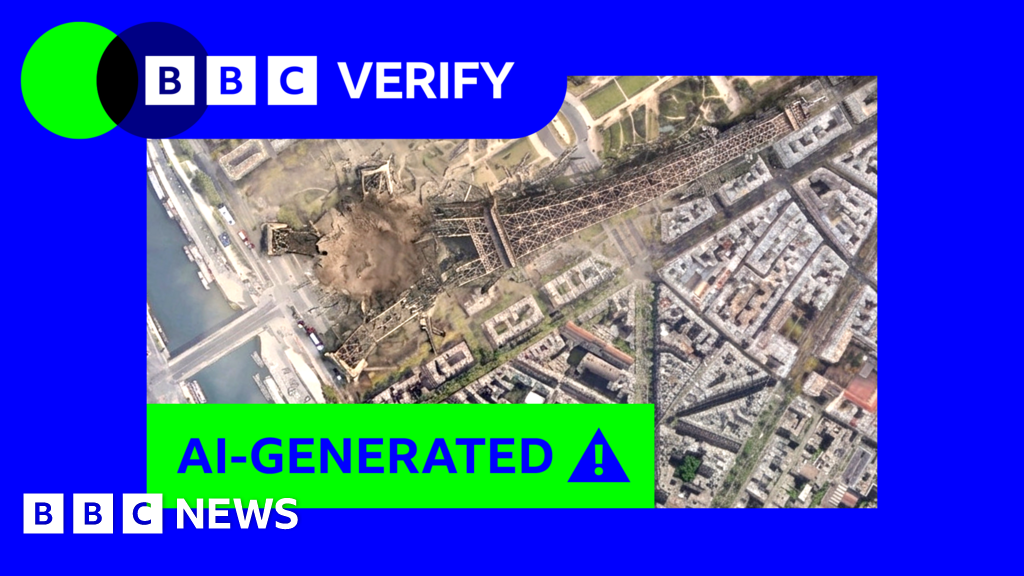
Experts warn new Google Earth AI tool may increase misinformation risks
Recent discussions surrounding artificial intelligence have raised significant concerns about the potential for misinformation, particularly in the generation of synthetic media. A media source recently reported on an alarming instance highlighted by Henk van Ess, an expert in AI and misinformation. Before the feature was temporarily suspended, it was demonstrated that AI technology had the capacity to create disturbingly realistic images that did not correspond to reality. These included fictitious representations of a nuclear power plant purportedly located in Iran, a refugee camp positioned along the US-Mexico border, and a fabricated hospital in Gaza marked by a bomb crater.
These instances underscore a growing apprehension regarding the implications of AI in the realm of public discourse and information dissemination. The capability to produce highly convincing imagery has the potential to mislead the public, distort perceptions of critical global issues, and escalate tensions on a geopolitical scale. The ability to fabricate such imagery raises questions about ethical standards and regulatory frameworks that govern AI technologies.
The urgency for robust guidelines becomes evident in light of these manipulative capabilities, prompting discussions among policymakers, tech companies, and advocacy groups. Many argue that as AI continues to advance, there must be a corresponding evolution in regulations to address the ethical use of such technologies. The advent of AI-generated content challenges traditional notions of authenticity, particularly in the context of journalism and visual media.
Furthermore, the implications extend beyond mere misinformation. Concerns regarding privacy, data security, and the spread of harmful content are at the forefront of discussions on AI governance. In a world increasingly mediated by technology, the stakes are high, and the potential for misuse remains ever-present.
As the debate continues, stakeholders are urged to collaborate on establishing comprehensive frameworks that could mitigate the risks associated with AI-generated misinformation while harnessing its potential for positive applications in various sectors. The path forward will depend on a concerted effort to balance innovation and responsibility in the age of artificial intelligence.
#business #politics #technology


