
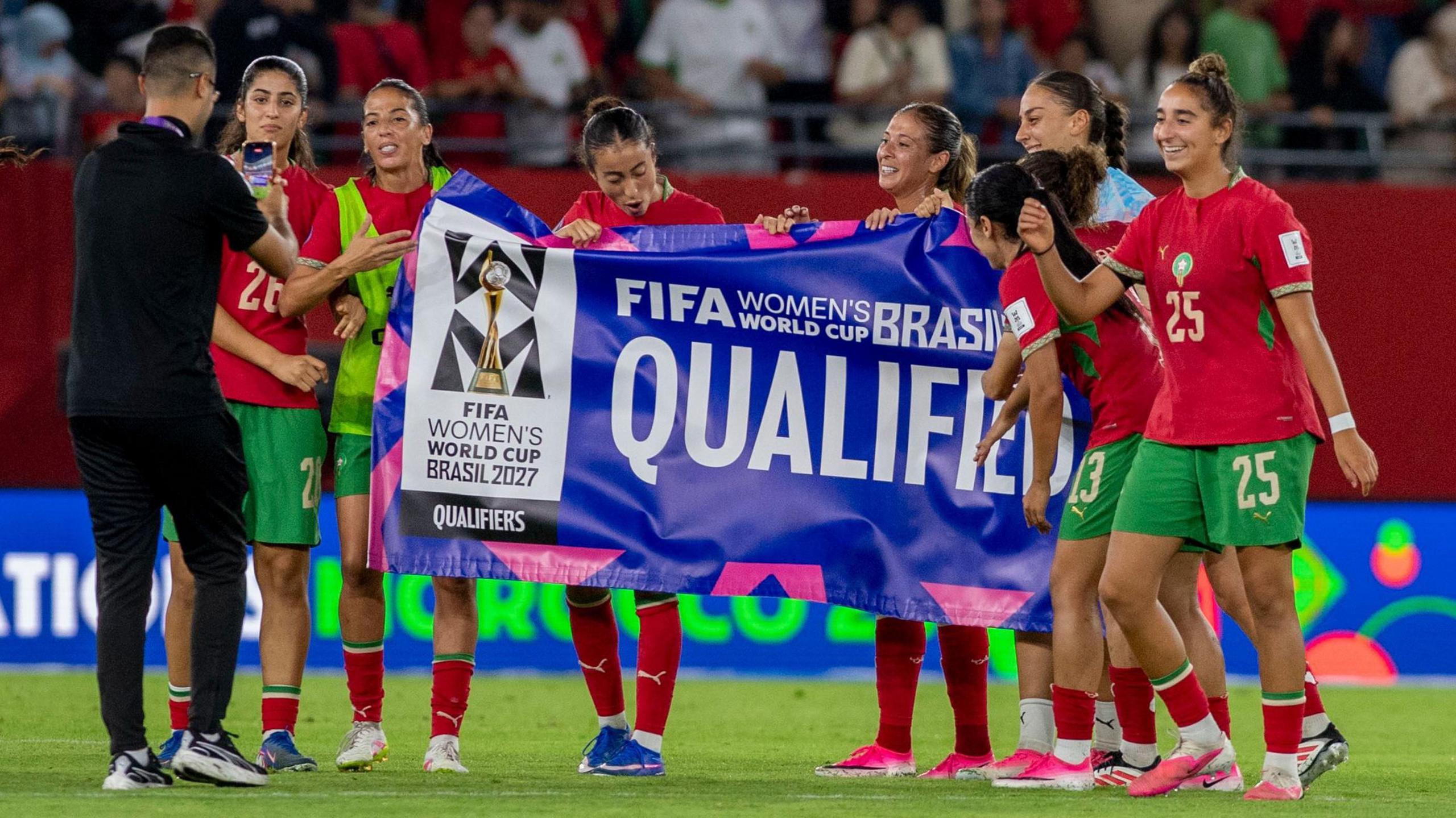
Algeria, Cameroon, Malawi, and Morocco qualify for 2027 Women’s World Cup
In a significant development for women’s football, Algeria, Morocco, Cameroon, and Malawi have secured their places in the 2027 Women’s World Cup scheduled to be held in Brazil. This qualification was achieved through the ongoing Women’s Africa Cup of Nations (Wafcon), which serves as both a prestigious tournament and a qualifier for the World Cup.
Algeria made history by reaching the Wafcon semi-finals for the first time, overcoming a challenging match against Ivory Coast. The Algerian team triumphed 2-1, with notable contributions from players Ines Khiri and Amira Ould Braham. The match took a pivotal turn when Ivory Coast’s N’Sira Oudraogo was sent off, altering the dynamics in favor of Algeria.
Morocco also advanced with a win over South Africa, sealing a 2-1 victory, courtesy of goals from Sakina Ouzraoui Diki and Hanane Ait El Haj. In another enthralling match, Cameroon dispatched Nigeria 1-0, thanks to a dramatic 30-yard free-kick from the young talent Myriam Nyadjou. Malawi’s remarkable journey saw them defeat Ghana 2-1, despite being ranked 153rd in the world, which marks a notable upset in these international competitions.
The semi-finals of Wafcon are set to take place on Wednesday, featuring Morocco against Cameroon, while Algeria will face off with Malawi. Despite their exit in the quarter-finals, countries such as Ghana, Ivory Coast, Nigeria, and South Africa remain in contention for World Cup qualification. They have the opportunity to participate in intercontinental playoffs scheduled for November and December, where the winners will earn their chance for a spot in Brazil.
The 2027 Women’s World Cup is set to expand its participant pool to 32 teams, with 18 nations already confirmed. Teams that have qualified up to this point include formidable squads from various continents, solidifying an exciting tournament ahead. The competition in the upcoming months promises to showcase not only the skill but also the growing interest and investment in women’s football globally.
As the anticipation builds for the World Cup beginning on June 24 and concluding on July 25, 2027, the narrative of women’s football continues to evolve, demonstrating resilience and potential across multiple regions.
#business #entertainment #politics #technology


