Pakistan intensifies measures ahead of march demanding the release of Imran Khan.

In recent developments in Pakistan, significant political tensions are brewing as supporters of imprisoned former Prime Minister Imran Khan prepare to march on the capital, Islamabad. This demonstration, driven by calls for Khan’s release and the restoration of political rights, comes amidst heightened security measures and a crackdown on opposition figures, revealing the precarious balance of power in a nation grappling with internal dissent and economic challenges.
Islamabad, Pakistan — The motorway connecting Pakistan’s capital with Peshawar, approximately 180 kilometers (110 miles) to the northwest, has been closed to all traffic until further notice, as indicated by a police notification. Similarly, the highways leading to Dera Ismail Khan, the Hazara motorway, and the Grand Trunk Road at Attock have also been shut down.
These routes facilitate vital traffic between Islamabad and Khyber Pakhtunkhwa, a province governed by the party of jailed former Prime Minister Imran Khan. His supporters plan to march on the capital on Sunday, September 27, to demand his release. Meanwhile, the motorway from Lahore, situated about 375 kilometers (235 miles) to the southeast, remains open.
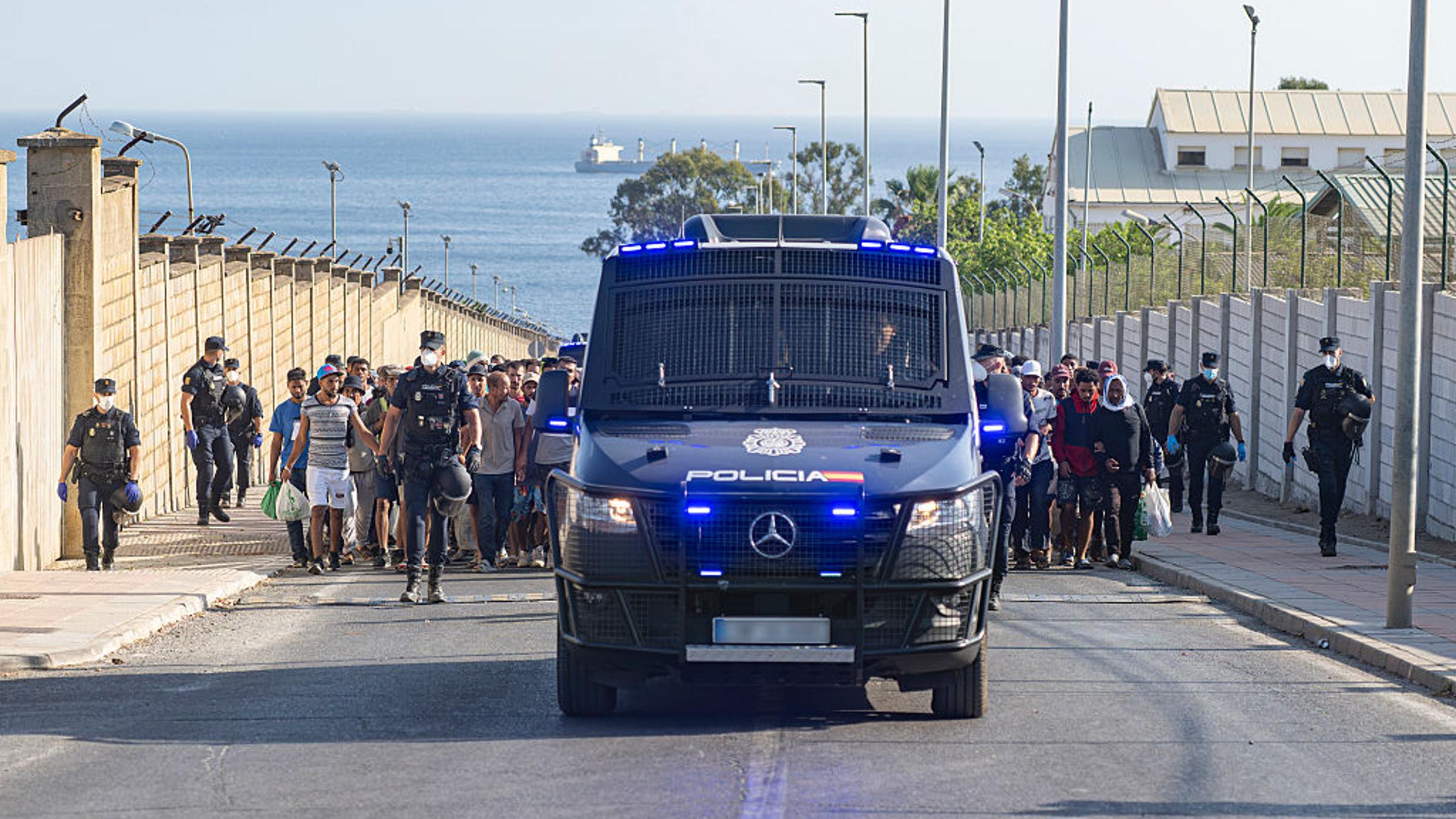
In Islamabad, authorities have created barricades using welded shipping containers packed with gravel and sand to prevent them from being moved. Several schools and colleges have also been instructed to close as security forces from Punjab and Sindh are housed in these facilities. Police anticipate the march could attract between 20,000 and 25,000 participants, according to local media.
While two major opposition parties in the country announced their plans for marches this month, only Khan’s Pakistan Tehreek-e-Insaf (PTI) has been met with such extensive preemptive measures. The Jamaat-e-Islami (JI), a religious party, had also intended to march on Islamabad recently to protest rising fuel prices, but its leader, Hafiz Naeemur Rehman, received a phone call from Prime Minister Shehbaz Sharif, leading to the postponement of JI’s protest.
Khan’s three sisters, all over the age of 65, have been detained in Lahore, along with at least six legislators from his party in Islamabad under a public order law that allows preventive detention without charge. While PTI asserts the number of those arrested is significantly higher, including a lawmaker who has not been located, Khan has remained imprisoned since August 2023, continuing to be the most prominent figure of opposition in the country.
Despite PTI’s recent decline in protest activities, analysts highlight that the government’s response indicates it views the upcoming march as a serious threat. Lahore-based political analyst Habib Akram emphasized that rather than just facing a challenging moment, the government’s actions reflect deeper anxieties regarding its survival.
As preparations for the march go on, more than 2,000 containers have been deployed across Islamabad and at Attock Bridge, which is a crucial crossing between Khyber Pakhtunkhwa and Punjab. Over 19,000 police officers are being mobilized, with thousands arriving at Attock to fortify security.
In an editorial, Dawn, Pakistan’s leading English-language newspaper, discussed the government’s unprecedented approach, suggesting that it appears to be preparing not only for a political event but for an invasion. Junior interior minister Talal Chaudhry rejected this notion, stating that life in Islamabad continues as normal. However, the extensive security arrangements reveal the underlying tensions.
Recent weeks have witnessed some of the deadliest incidents for Pakistan’s security forces, including the fatal attack on a police compound in Kohat, where more than 20 people lost their lives. Interior Minister Mohsin Naqvi referenced these security challenges while discussing the expected march, noting that the situation in Khyber Pakhtunkhwa has been dire, including incidents of suicide bombings and assaults.
Government officials have pointed to remarks from PTI leaders to characterize the demonstration as a major law and order risk. In light of a ruling from the Islamabad High Court prohibiting road blockades, arrests have risen, with claims of preventive detentions of numerous party members.
The resistance against the government’s heavy-handed tactics underscores the ongoing political strife as PTI grapples with its diminished strength and aspirations for political legitimacy. Despite facing various obstacles, including being stripped of its electoral symbol before the February 2024 elections, PTI garnered a significant number of seats. The political landscape remains complex, characterized by declining public trust in the current government.
Political observers note that recent surges in fuel prices, exacerbated by the ongoing war in the Middle East, compound public dissatisfaction, raising concerns about the potential for widespread unrest that could further challenge the government’s stability.
#PoliticsNews #MiddleEastNews