Microsoft considers making Fallout, Elder Scrolls, and Minecraft exclusive to Xbox
Microsoft’s Xbox division has faced increasing challenges as it attempts to compete with rivals PlayStation and Nintendo in the gaming console market. A recent survey issued to a select group of Xbox Insider Program participants indicates that Microsoft may be contemplating significant changes in its strategic approach to address this competitive gap.
The survey is believed to target users who own multiple gaming devices, thereby providing Microsoft insight into the behaviors and preferences of its user base. Reports from a media source suggest that feedback collected from these surveys could lead to a potential shift towards greater exclusivity in Xbox’s game offerings. Historically, Microsoft’s strategy has involved releasing games across platforms, which has arguably diminished the incentive for players to engage with the Xbox ecosystem. This decision has not only impacted Microsoft’s direct sales but also benefited competitors, as Xbox titles sold on platforms like PlayStation result in a 30% fee that hampers profitability.
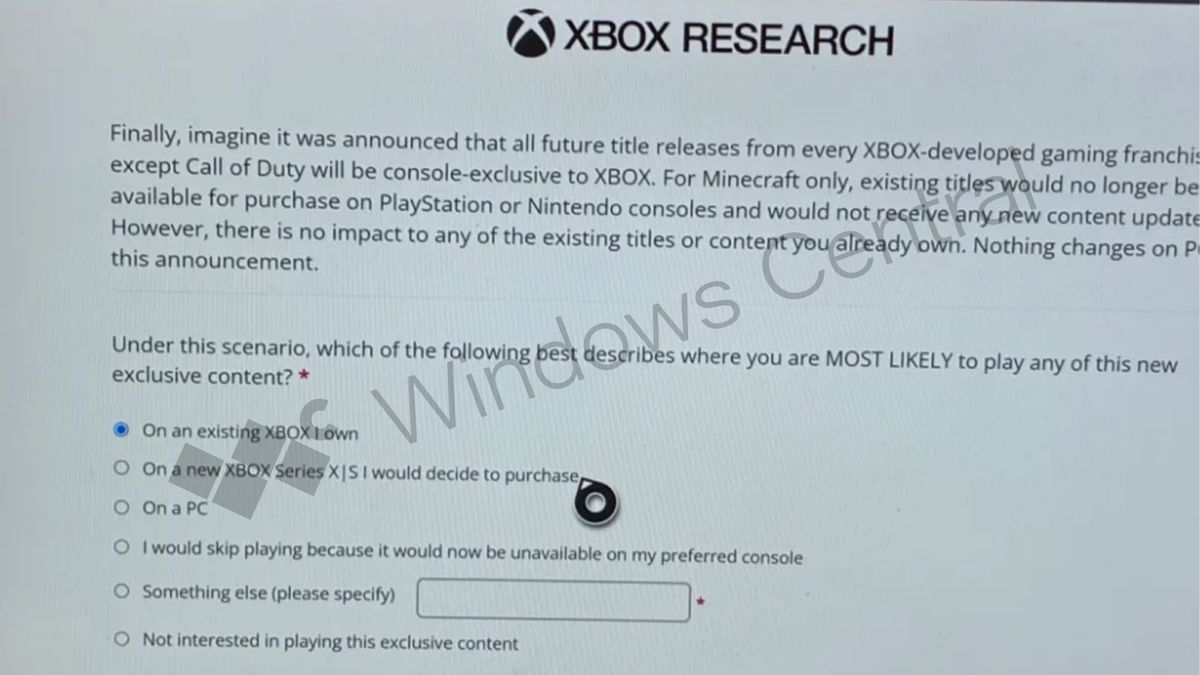
The survey questions explore various hypothetical scenarios, such as users’ willingness to shift their gaming preferences if specific franchises—beloved series like Fallout, The Elder Scrolls, DOOM, and even Minecraft—were to become console exclusives. Notably, the survey emphasizes that while existing games would remain accessible on other platforms, new content updates would not be available to users on competing systems. This approach suggests that Microsoft is considering full exclusivity for new titles to incentivize players to adopt the Xbox platform more firmly.
In a more radical inquiry, the survey also poses a “nuclear option,” prompting gamers to consider their purchasing behavior if all future Xbox-developed titles—excluding the popular “Call of Duty” series—were to become exclusive to Xbox consoles. This approach highlights the urgent need for Microsoft to reevaluate its position within the gaming landscape, particularly as hardware sales face challenges amid ongoing supply chain disruptions.
Despite the potential benefits of an exclusivity strategy, observations regarding market trends indicate that hardware availability remains an ongoing concern for Microsoft. With the backdrop of the ongoing component crisis limiting product distribution, and considering the preference of gamers for exclusive content, the question remains whether Microsoft can successfully pivot its strategy without alienating users who appreciate its current multiplatform offerings.
Finally, while surveys may provide helpful data points, they ultimately reflect a snapshot of gamer sentiment and do not guarantee a successful execution of policy changes. The future of Xbox remains in a state of uncertainty, but the potential for innovative shifts in strategy could lead to interesting developments in the gaming industry.
#business #entertainment #technology