Cuba criticizes US actions towards Venezuela amid escalating tensions between the two nations.

Cuba has raised alarm over escalating military actions by the United States in the Caribbean, perceiving them as a direct threat to regional stability and Venezuelan sovereignty. Amid increasing tensions and the potential for foreign intervention in Venezuela, Cuba’s government is calling for a peaceful resolution founded on dialogue, while also appealing to the American public to reconsider the current course of aggression. This situation underscores not just geopolitical dynamics but also highlights the delicate balance of relationships among nations in the region.
Cuba has accused the United States of pushing for the violent removal of Venezuela’s leadership, warning that the increasing deployment of U.S. military forces in the Caribbean signifies an “exaggerated and aggressive” threat to regional stability. In a statement on Tuesday, Cuba’s Foreign Minister Bruno Rodriguez condemned the situation, urging Americans to “stop this madness.”
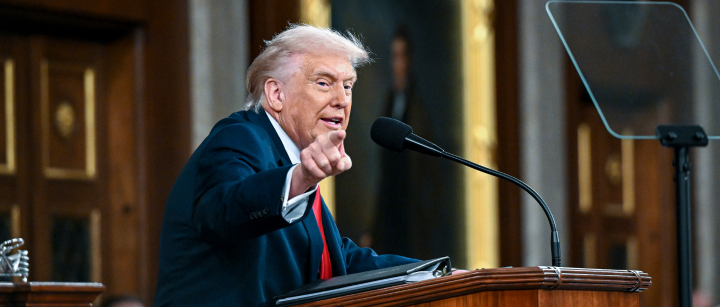
Rodriguez cautioned that U.S. actions could potentially lead to an unimaginable number of deaths and create a violent scenario for the hemisphere, adding that such measures would breach international law and the United Nations Charter. The condemnation coincides with U.S. President Donald Trump contemplating further actions against Venezuelan President Nicolas Maduro, as the White House has refrained from ruling out more aggressive measures.
The Trump administration has continuously accused Maduro of orchestrating a drug smuggling operation into the United States, yet it has failed to substantiate these claims with any credible evidence. Over the past two months, the U.S. military has targeted 21 boats in the Caribbean Sea and the Pacific Ocean, claiming involvement in drug trafficking, resulting in at least 83 fatalities. However, no evidence has been presented showing narcotics were aboard, and legal scholars maintain that these military actions likely violate international law regardless.
Currently, the U.S. military presence in the Caribbean is the most robust it has been in decades, with around 15,000 personnel stationed throughout the region. Although Trump asserts he does not aim to topple the Venezuelan government, reports have surfaced suggesting that Washington is preparing new operational phases concerning Venezuela, including potential plans to overthrow Maduro.
In a further escalation, Trump has bestowed the CIA with authorization to conduct covert operations in Venezuela and has increased a million reward for Maduro, reflecting a sharp rise from previous terms.
Maduro, who has presided since 2013, alleges that Washington is determined to eliminate him from power and insists that both the Venezuelan military and citizenry would resist any foreign intervention.
Tensions intensified when the U.S. designated the Cartel de los Soles—an informal term for the alleged high-level corruption among Venezuelan officials—as a foreign terrorist organization, although it is not a formal cartel. Furthermore, Trump has expressed intentions to communicate directly with Maduro in the near future.
Amid rising tensions, senior U.S. military officials have commenced a tour of the Caribbean, aiming to solidify regional relationships. On Tuesday, Dan Caine, the leading U.S. military officer, engaged Prime Minister Kamla Persad-Bissessar of Trinidad and Tobago in discussions about shared challenges, including the destabilizing influences of illicit narcotics and transnational criminal organizations.
As Caine reassured Persad-Bissessar of U.S. commitment to address common threats, his tour also included a stop in Puerto Rico, where he met with U.S. troops. U.S. Defense Secretary Pete Hegseth is scheduled to continue these diplomatic efforts in Santo Domingo, meeting with the President of the Dominican Republic, Luis Abinader, to reinforce defense alliances.
Most Caribbean leaders have advocated for restraint and dialogue concerning U.S. military actions against perceived drug smugglers. However, Persad-Bissessar has explicitly supported these operations, stating her lack of sympathy for drug traffickers and advocating for a forceful approach.
Her comments, while resonating with certain sectors, have drawn criticism from regional figures and domestic political opponents. Trinidad’s former foreign minister, Amery Browne, termed her stance as “reckless,” asserting it distances Trinidad and Tobago from CARICOM, the regional trade bloc.
#PoliticsNews #WorldNews