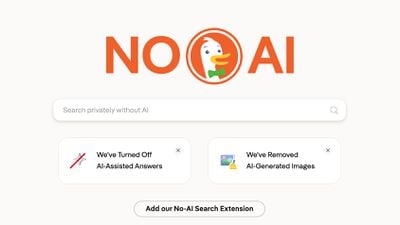
DuckDuckGo Sees Increased Traffic as Users Move Away from Google’s AI Search Changes
In the aftermath of Google’s recent announcement at its I/O event, the privacy-centric search engine DuckDuckGo has observed a notable increase in interest for its “No AI” search feature. This shift follows Google’s introduction of a new “intelligent” search box, which incorporates artificial intelligence (AI) to enhance user experience. The updated feature includes AI-generated suggestions, the ability to handle follow-up inquiries, and an expansion of Google’s Personal Intelligence capabilities, providing users with a more interconnected browsing and communication experience.
According to a media source, DuckDuckGo reported that visits to its No AI search option have surged more than threefold following the unveiling of Google’s new features on May 19. As of May 28, traffic to DuckDuckGo’s No AI page was consistently around 84 percent higher than average, clearly indicating a growing demand among users for a search experience that eschews AI-generated content and prioritizes privacy.
In response to this increase in demand, DuckDuckGo has been proactive in promoting extensions for popular web browsers, including Chrome and Firefox, which allow users to set “No AI” as their default search preference. The No AI option specifically avoids AI-assisted answers, eliminates chat interfaces, and reduces the prevalence of AI-generated images. This provides users with a straightforward search experience, free from the complexities introduced by AI technology.
While DuckDuckGo can be configured as the default search engine on Apple devices, setting the No AI search page directly as the default is not currently possible. Nevertheless, users opting for this experience can be reassured, as DuckDuckGo’s existing AI tools are disabled when using the No AI feature. The company also announced plans to integrate No AI search settings within its other browser extensions, including those for Edge and Opera, in the near future.
In the broader landscape of privacy-focused searches, DuckDuckGo is not alone. Alternatives such as the paid search engine Kagi also prioritize user privacy by minimizing AI results. For per month, Kagi offers a subscription model with a limited number of searches; for , users can access unlimited queries. This model ensures a lack of advertisements and a commitment to not selling user data, emphasizing an ongoing shift towards privacy-conscious online searching.
As consumers become increasingly aware of their digital privacy, the demand for search engines that prioritize user control over AI integration is likely to continue its upward trend.
#business #technology #environment