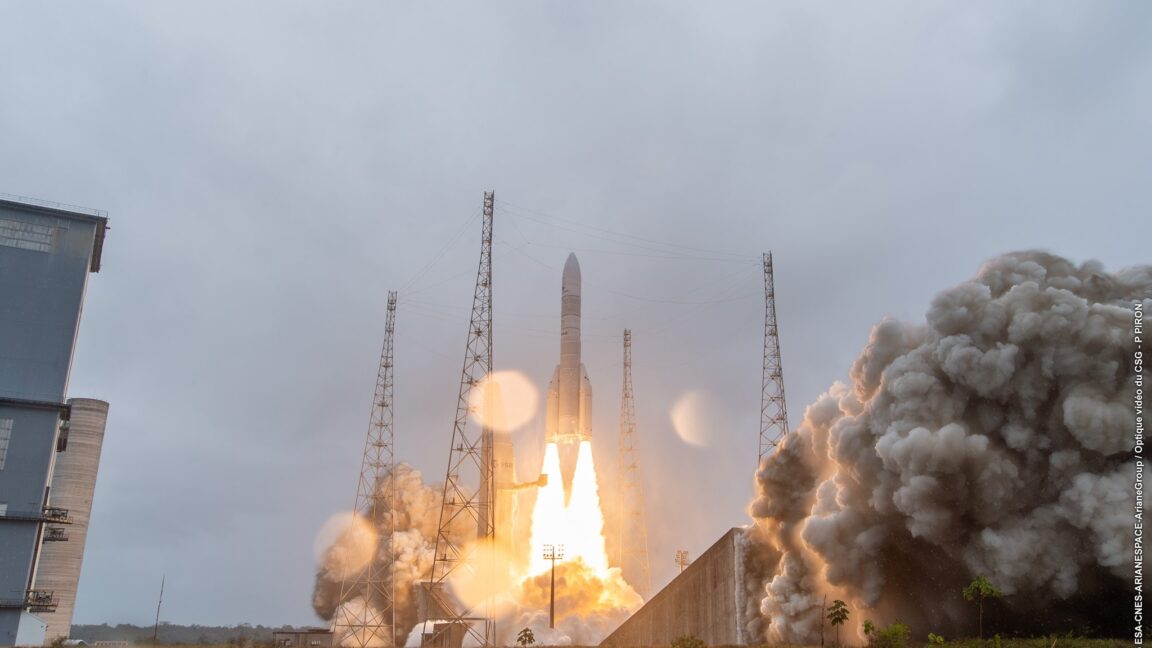
Europe halts planned upgrades for Ariane 6 rocket
The European space industry finds itself at a crossroads as leaders grapple with the financial implications of the Ariane 6 rocket program, which is touted as a commercial endeavor yet is indicative of a broader fiscal dilemma. With an investment of approximately 3.6 billion euros allocated towards the rocket’s development and its launch facility in French Guiana, the economic sustainability of this initiative remains in question. A media source recently revealed that the European Space Agency (ESA), under the direction of Josef Aschbacher, has confirmed that ongoing government subsidies will be essential to offset the costs of each launch. These subsidies are estimated to range between 32 million and 38 million euros per flight, based on an operational model of nine flights annually.
This financial schema highlights the stark reality that European taxpayers could ultimately contribute over 100 million euros per launch before any revenue is generated by Arianespace, the rocket’s operator. Consequently, as the operational objective for Ariane 6 aims for nine to ten launches a year, discussions are emerging concerning the acceleration of production capacity to meet an increasing global demand for launch services.
ESA’s Aschbacher has indicated a commitment to achieving up to ten launches in the upcoming year, yet considerations are being made to potentially expand this capacity to as many as 12, 15, or even 20 launches. This endeavor obligates Europe to increase production of various components, including solid-rocket motors and first-stage engines. The complexities surrounding this task, however, extend beyond mere production capabilities; they necessitate significant investments in manufacturing infrastructure and logistics.
The looming question for European ministers is whether substantial financial commitments for scaling production will yield adequate returns to justify the continued reliance on subsidies to attract commercial customers. This challenge raises critical discussions regarding the viability of investing in the present Ariane 6 program versus channeling resources toward developing a next-generation rocket that incorporates partial reusability, a feature increasingly seen in competitors from the United States and China. Ultimately, the decisions made by European leadership later this year will be pivotal in determining the future trajectory of the Ariane 6 initiative and the broader aspirations of Europe’s space ambitions.
#business #politics #technology