How tampons in the men’s room helped derail the Netflix-Warner Bros. deal – New York Post
There were many defining moments featured in the months-long battle for the ownership of Warner Bros. Discovery: sit-downs to woo President Trump, high-profile congressional hearings, a brutal bidding war, and a tampon.
Yes, a tampon.
During the negotiations, while Netflix was telling skeptical GOP lawmakers that it wasn’t a left-wing company looking to get more powerful by snapping up WBD, a delegation of legislators paid a visit to its headquarters, and one was both shocked and disturbed to find a basket containing tampons in the men’s restroom.
To be clear, there are other factors involved in CEO Ted Sarandos’ decision to cancel his nearly completed purchase of WBD’s studio and streaming service. But the “tampon incident,” as it has become known on Capitol Hill, does carry some weight in the unwavering political opposition from the GOP to Sarandos’ ambitions.

“This is 2026, not 2020,” said one GOP staffer with firsthand knowledge of the matter. “What were they thinking?”
According to the spin coming from Netflix, Sarandos’ $73 billion purchase of vast chunks of the company known as WBD came to a grinding halt last Thursday because he didn’t want to get into a bidding war with Paramount Skydance, which had just sweetened a “hostile” offer for the company to $80.5 billion.
David Ellison’s Paramount is a smallish media company with a big bank account. Ellison’s father is Larry Ellison, the Oracle co-founder worth nearly $200 billion. His deep pockets backed his son’s ever more expensive offers for the entire company.
Sarandos, meanwhile, runs a public company, with a market value that fell a whopping $200 billion during the costly takeover process that his existing shareholders obviously didn’t like. As Sarandos put it: “This transaction was always a ‘nice to have’ at the right price, not a ‘must have’ at any price.”
Maybe, but price wasn’t Sarandos’ only obstacle. During the six-month bidding war, many Republicans in Congress, state AG offices and of course the White House came to believe that Netflix was seeking to create a monopoly in streaming — an increasingly important way Americans consume entertainment.
Netflix denied this, arguing it faces competition for consumers from social media and YouTube, though opposition only seemed to intensify in recent weeks. One big worry: Netflix would use the market clout that WBD would give it to further push progressivism in its programming.
Sarandos has long argued that Netflix programming appeals to all political tastes, but conservative-leaning advocacy groups have produced research that its programming and documentaries more often push themes such as transgenderism, DEI (diversity, equity and inclusion), and other issues near and dear to the cultural left.
Sarandos and Netflix co-founder Reed Hastings, meanwhile, are both big supporters of Democrats and progressive policies. Susan Rice, a top official in the lefty Obama administration and a staunch critic of Trump, sits on its board. It was Rice’s inopportune comments on a podcast attacking companies that do business with Trump that is also said to have cost Sarandos more White House support for the WBD deal.
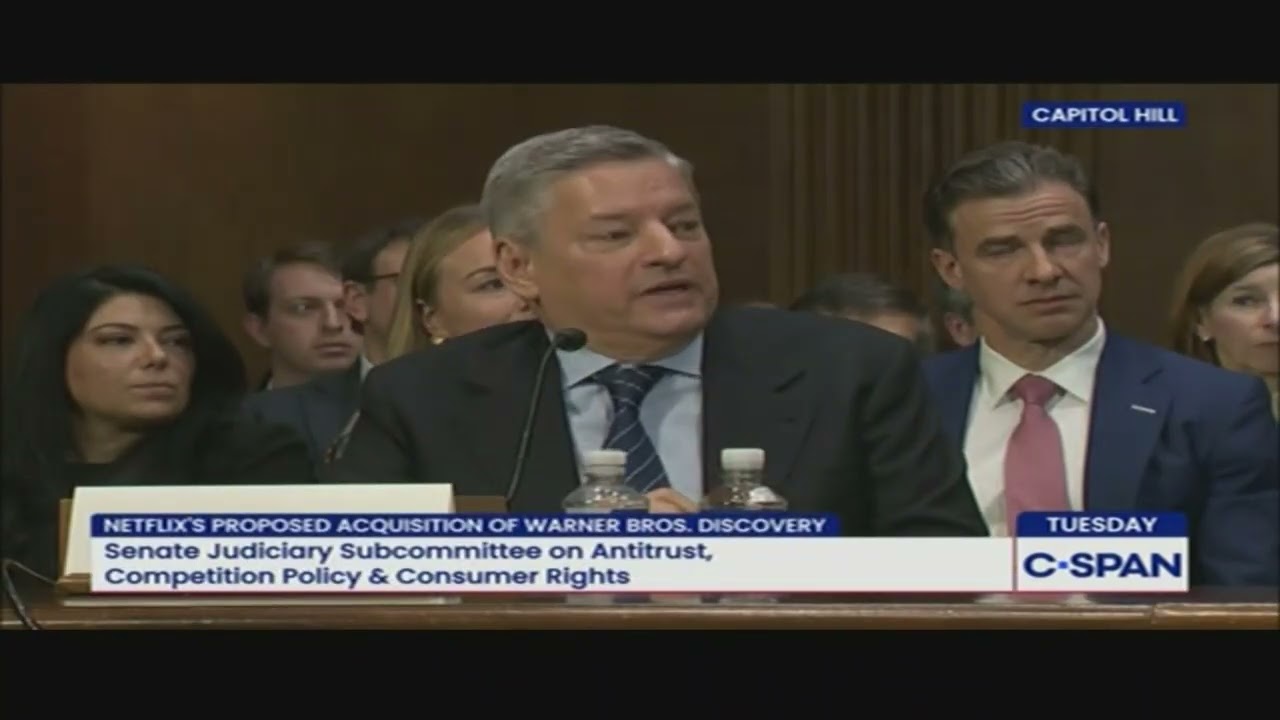
Last month, Sarandos was grilled on these matters by a Senate Judiciary antitrust subcommittee headed by Sen. Mike Lee (R-Utah). Not long after, Sarandos launched a charm offensive at GOP lawmakers and the White House, worried that a close call on WBD’s antitrust implications could turn into a rout against the deal if he didn’t tamp down on the political concerns, people close to the matter say.
His job only got more difficult when a bunch of GOP lawmakers paid a visit several weeks ago at Netflix HQ in Los Angeles, according to three people with direct knowledge of the matter. They were part of a congressional delegation that each year visits various Hollywood studios around the time of the Grammy Awards.

One attendee was Rep. Jason Smith (R-Mo.), chair of the powerful House Ways and Means Committee and a lawmaker who is skeptical of Netflix’s spin that it is a politically neutral provider of programming.
Even more so, according to a source who spoke with him, when during the confab, he went to the men’s room at the firm’s offices and noticed the basket of tampons.
“Let’s just say the chairman was pretty disturbed,” this person added.
In recent years, many tech companies have made tampons available in men’s rooms to promote diversity and inclusivity for trans employees. But conservatives believe such efforts to normalize transgenderism have dire societal effects, in that it proselytizes children into undergoing harmful surgeries, undermines the nuclear family and leads to men competing in women’s sports.
They also believe these values are front and center in Netflix’s programming, and the tampon incident, as it filtered through the halls of Congress, became proof that the company wasn’t changing its politics.
A spokesman for Smith declined to comment, while a Netflix spokeswoman had no comment.