
Israel Uses AI Technology for Demolitions in the West Bank
The rapid integration of artificial intelligence into military operations has prompted a global conversation about ethics, responsibility, and the potential consequences of technology in armed conflicts. In the context of Israel’s military strategy, the deployment of AI systems in the occupied Palestinian territories has raised significant concerns, as these technologies are being utilized to facilitate surveillance and displacement, yielding dire consequences for Palestinian communities. This intersection of technology and militarization highlights the urgent need for a nuanced discussion on the ethical ramifications of AI, particularly in conflict zones where vulnerable populations are impacted.
In its quest for advanced military capabilities, Israel has accelerated the incorporation of artificial intelligence into its defense strategies. Recent reports have highlighted the use of AI systems in Gaza to identify potential bombing targets, contributing to significant casualties among Palestinians, as illustrated in the award-winning documentary NAZA. This reliance on AI extends beyond Gaza, impacting the lives of Palestinians in the West Bank, where technological advancements have been weaponized to facilitate surveillance and forced displacement.
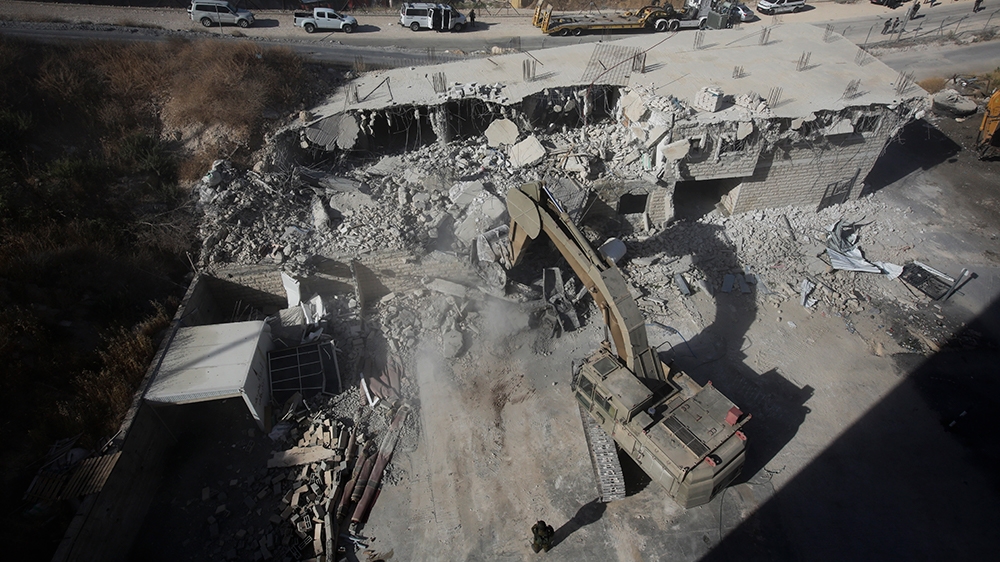
Research and testimonies from rights activists bring attention to a specific AI-driven tool known as ImiSight, developed by the Israeli weapons manufacturer Rafael. This product has been implemented extensively to monitor large areas and detect landscape alterations, which are subsequently justified as grounds for demolition. Initially employed in the Naqab desert to target Bedouin Palestinian communities, the tool’s disturbing utility has now been shifted to the West Bank, where it has a troubling track record of demolishing Palestinian homes paradoxically built in regions where obtaining permits is nearly impossible for these residents.
The Israel Land Authority established a dedicated enforcement unit in early 2025, aimed explicitly at operations within the West Bank. This is viewed by many, including the rights group Peace Now, as a significant step towards annexation. This agency employs advanced AI technology to facilitate the identification and demolition of structures deemed unauthorized, further complicating the already tense and volatile situation for Palestinian communities.
Amir Daoud, who oversees documentation at the Colonisation and Wall Resistance Commission, remarked on the strategic implications of this unit’s establishment, emphasizing the transition from a model of surveillance used in the Naqab to one directly impacting the occupied territories. The introduction of Israeli civilian administrative operations into the West Bank marks a shift that could have lasting political implications.
Advancements in satellite technology have compounded these challenges, enhancing the efficiency of aerial surveillance. Khaled Safi, a Palestinian technology expert, noted that new satellites equipped with AI can process images in real-time, eliminating the delays associated with human oversight. This leap forward has enabled Israel to surveil vast regions efficiently, with reports suggesting over 10,700 square kilometers in the Naqab have been surveyed, resulting in the forced evictions of more than 2,600 Bedouin residents.
The implications of these technologies extend far beyond mere surveillance; they create a framework for systemic displacement. Israeli human rights organizations have documented a worrying increase in demolitions across the West Bank, with an 80 percent rise observed in recent years. This surge underscores a chilling trend where AI algorithms serve as accelerators for punitive actions against Palestinians, allowing for swift identification and demolition of structures perceived as violations.
Moreover, the ongoing expansion of Israeli settlements, paired with the automation of enforcement through settler surveillance, adds another layer of complexity to the situation. The Israeli government has allocated significant funding for settler patrols and surveillance equipment, amplifying the risks posed to marginalized communities. In a distressing commentary on the ethics of such automatization, experts have raised alarms about the implications of removing human review from critical decisions that affect lives and livelihoods.
As these dynamics unfold, the Palestinian territories are increasingly being viewed not simply as a site of conflict, but as a testbed for advanced military technologies. This troubling intersection between AI and military enforcement invites further scrutiny and calls for a comprehensive dialogue surrounding the ethical responsibilities tied to the use of such technologies in environments marked by conflict and displacement.
#PoliticsNews #MiddleEastNews


