
Issues Identified in Government System for Identifying Noncitizen Voters
Recent discussions surrounding voter registration in the United States have drawn renewed attention, particularly following comments made by Republican Senator Mike Lee. He suggested that “at least tens of thousands, probably hundreds of thousands,” of noncitizens are illegally registered to vote. This assertion is primarily based on the use of a federal data-matching tool employed across nearly two dozen states, which he claims could clarify the extent of the issue. However, the validity of this tool has come under scrutiny, as it has unjustly flagged a significant number of U.S. citizens as noncitizens.
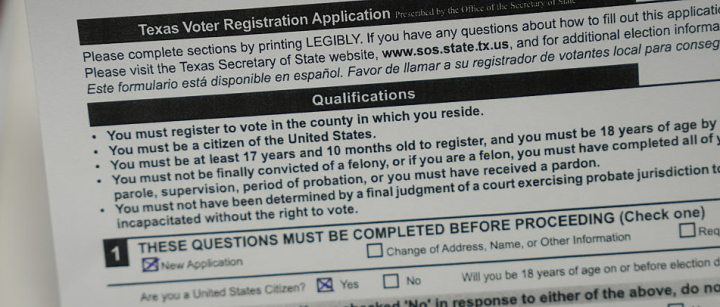
Reports indicate that in a recent year, the data-matching program reviewed about 49 million voter registrations and identified approximately 10,000 cases warranting further investigation. Yet, upon closer examination, county officials consistently found U.S. citizens among those flagged. Additionally, election administrators noted that instances arose where noncitizens were inadvertently included on the voter lists, alongside cases where individuals mistakenly identified themselves as noncitizens on their registration forms, subsequently creating confusion.
Experts refute claims of widespread noncitizen voting, asserting that the phenomenon is exceedingly rare. This perspective was echoed by Jasleen Singh, a senior lawyer at the Brennan Center for Justice, who critiqued Lee’s assertions as lacking empirical support. She emphasized that while the SAVE (Systematic Alien Verification for Entitlements) program offers tools for scrutiny, the data it provides must be approached with caution due to significant inaccuracies.
Amid ongoing debates, the SAVE America Act, which Lee champions, seeks to mandate that all states submit their voter registration lists for verification through the SAVE program. Although it has passed in the House, its implementation faces challenges in the Senate. Several states, particularly those with Democratic governance, have opted not to share their voter rolls with the federal government, which has led to legal confrontations.
In light of these discussions, a significant finding in Lee’s home state of Utah is instructive: state officials conducting citizenship reviews of registered voters concluded that noncitizens are exceedingly rare within the state’s voting population. This finding underscores the importance of rigorous, data-driven approaches to electoral integrity without undermining the rights of eligible voters.
Moreover, a broader investigation into states utilizing the SAVE program revealed that while some flagged individuals were appropriately identified as noncitizens, numerous cases were erroneous. Reports documented several instances where registered voters, including naturalized citizens, were mistakenly labeled as noncitizens, highlighting the program’s limitations.
As discussions continue, state officials and electoral experts alike stress the need for accurate data and thoughtful policies that protect the voting rights of all citizens. The demand for electoral integrity and accessibility remains a priority, emphasizing the importance of both safeguarding democracy and fostering inclusive participation.
#PoliticsNews #WorldNews


