Jerome Powell Just Threw President Donald Trump Under the Bus One Last Time Before His Term as Fed Chair Ends – Yahoo Finance
It’s nearly the end of an era at the nation’s central bank. In just 11 days, on May 15, Jerome Powell’s second term as Fed chair will come to an end and, presumably, President Donald Trump’s nominee to succeed him, Kevin Warsh, will begin his tenure. It’ll mark a new day for the Dow Jones Industrial Average (^DJI +0.73%), S&P 500 (^GSPC +0.81%), and Nasdaq Composite (^IXIC +1.03%), as well.
It’s been apparent for more than a year that Powell wouldn’t be back for a third four-year term. Sitting presidents are responsible for nominating the head of the Fed, and Trump and Powell have been publicly bickering about interest rates since the beginning of the president’s second, non-consecutive term.
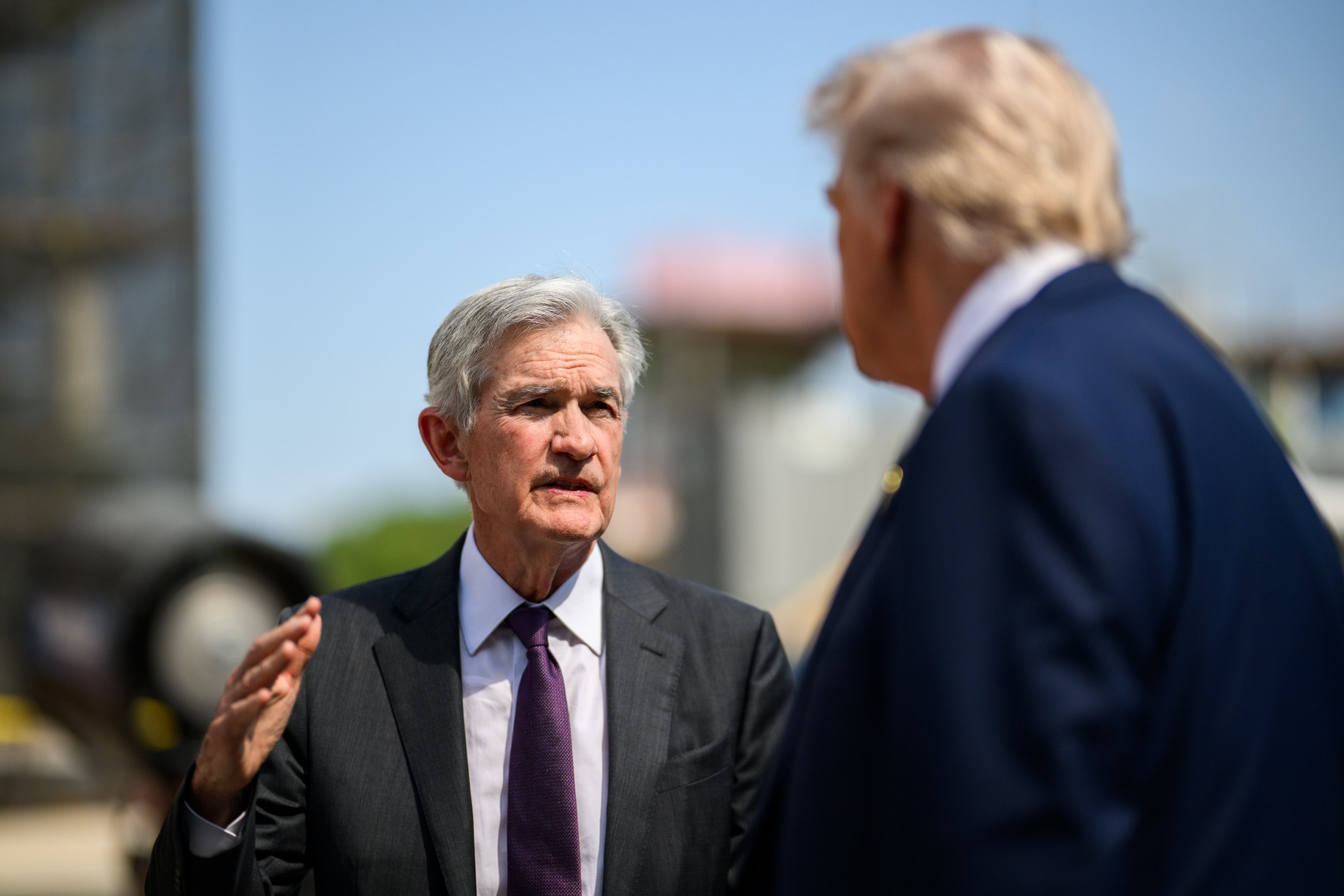
Fed Chair Jerome Powell speaking with President Donald Trump. Image source: Official White House Photo by Daniel Torok.
Trump has openly critiqued Powell and members of the Federal Open Market Committee (FOMC) for not aggressively cutting interest rates to 1% or below. Lower interest rates would likely fuel corporate borrowing, leading to more hiring, acquisitions, and increased spending on innovation. It would also make it cheaper for America to service its $39 trillion in national debt.
Meanwhile, Powell has been assertive in his stance that the central bank will allow economic data, not politics, to guide its monetary policy decisions.
Jerome Powell just threw Donald Trump under the bus concerning inflation
Powell’s last FOMC meeting as Fed chair gave him one more opportunity to put the spotlight of higher inflation (i.e., the reason rate cuts aren’t happening) squarely on Donald Trump’s shoulders.
While noting that most measures of inflation are consistent with the central bank’s long-term 2% inflation goal, Powell had this to say in his final FOMC meeting:
Excluding volatile food and energy categories, core PCE prices rose 3.2% over the 12 months ending in March. This relatively high rate largely reflects the effects of tariffs on prices in the goods sector.
Core Personal Consumption Expenditures (PCE) is arguably the top inflation-measuring yardstick used by members of the FOMC to gauge price changes in consumer goods and services. Powell has repeatedly singled out the stickiness of Trump’s tariffs in the goods sector for lifting Core PCE above where the Fed would like it to be.
The outgoing Fed chair also highlighted the Iran war as a prevailing risk. “The economic outlook remains highly uncertain, and the conflict in the Middle East has added to this uncertainty,” said Powell.
Average U.S. gas prices per gallon on April 7, per AAA:
• Regular: $4.14 (⬆️ $1.16 since war in Iran began on Feb. 28)
• Premium: $5.02 (⬆️ $1.16 since war began)
• Diesel: $5.65 (⬆️ $1.89 since war began)
— NBC News (@NBCNews) April 7, 2026
The inflationary effects of the largest energy supply disruption in history, caused by the Iran war, have sent energy prices soaring. Based on estimates from the Cleveland Fed’s Inflation Nowcasting tool, trailing 12-month inflation is forecast to jump from a reported 2.4% in February to 3.56% in April.
Powell’s FOMC meeting comments make clear that rate cuts are almost certainly off the table in 2026, if not considerably longer, due to Trump’s actions in Iran and through his use of tariffs.
The bigger implication is what this means for a historically expensive stock market. Investors had baked in several rate cuts in 2026-2027 to support premium equity valuations. With near-term cuts effectively off the table, the Dow Jones Industrial Average, S&P 500, and Nasdaq Composite are exposed and vulnerable to meaningful downside.