Libyan War Crimes Suspect Taken into Custody by International Criminal Court
The recent detention of Khaled Mohamed Ali El Hishri represents a significant step towards accountability for alleged war crimes in Libya, highlighting ongoing efforts by the International Criminal Court (ICC) to address serious human rights violations. By emphasizing the importance of justice for victims, the ICC aims to restore faith in the rule of law in a region scarred by conflict since 2011. This development is emblematic of a renewed commitment to confronting historical atrocities and establishing a foundation for future peace and stability in Libya.
The International Criminal Court (ICC) has announced the transfer of Khaled Mohamed Ali El Hishri into its custody, following allegations of crimes against humanity and war crimes committed during his tenure as a senior official at Mitiga Prison in Libya from 2015 to 2020. El Hishri was surrendered to the ICC by authorities in Germany, where he was arrested on July 16. He is accused of overseeing a prison environment characterized by severe human rights abuses, including murder, torture, rape, and sexual violence against detainees, many of whom faced prolonged imprisonment under harsh conditions.
The ICC stated that El Hishri’s alleged crimes reflect systemic failures in detention facilities that have remained largely unaccountable. Since March 2011, the court has been investigating atrocities committed in Libya, an effort spurred by a United Nations Security Council request aimed at ensuring justice and accountability for victims of violence and human rights violations. In a recent briefing to the 15-member Security Council, ICC Deputy Prosecutor Nazhat Shameem Khan emphasized a renewed momentum towards justice in Libya, calling for comprehensive support to ensure that victims are no longer overlooked.
Despite facing what Khan described as “unprecedented headwinds,” including intimidation of its officials, the ICC remains committed to holding perpetrators accountable. Many within the international community are hopeful that El Hishri’s case will activate further legal actions within Libya, inspiring confidence in ongoing judicial processes and reinforcing the importance of cooperation with international law.
Libya has uniquely accepted the ICC’s jurisdiction, extending from 2011 through the end of 2027, despite not being a party to the Rome Statute, the treaty that established the court. There are still nine outstanding arrest warrants related to the same case, which includes high-profile individuals like Saif Al-Islam Gaddafi, the son of former Libyan leader Muammar Gaddafi. While Gaddafi’s family remains a focal point of scrutiny, Osama Elmasry Njeem, the Chief of Judicial Police, was detained in Italy earlier this year but was reported released and returned to Libya shortly thereafter.
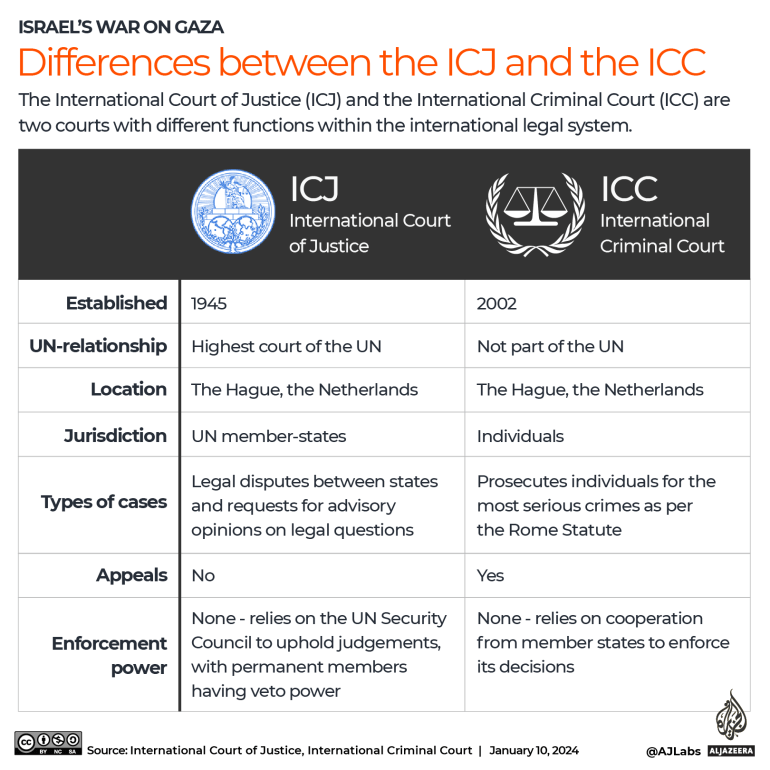
Established in 2002, the ICC plays a critical role in prosecuting serious crimes such as war crimes and crimes against humanity, dependent on cooperation from member states to execute its mandates effectively. Unlike the International Court of Justice (ICJ), the ICC operates independently of the United Nations, yet both institutions share a common goal of advancing justice and human rights.
#PoliticsNews #MiddleEastNews