Nuclear fusion is a brainteaser for investors as well as scientists – Financial Times

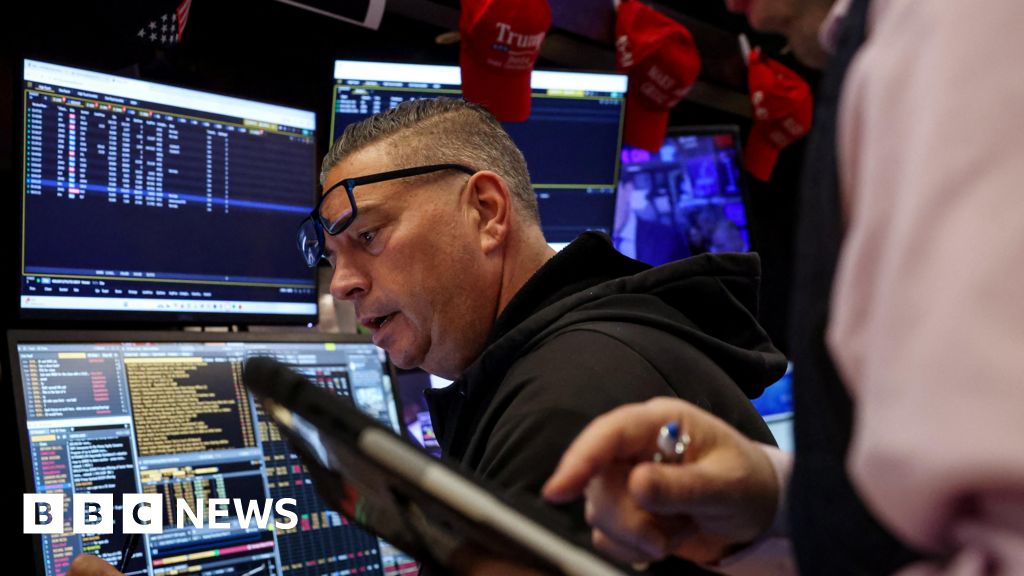
Nuclear fusion has put the world’s greatest minds through their paces for decades. But smashing nuclei together in the pursuit of abundant energy is not just a scientific challenge. If President Donald Trump’s listed family business completes its proposed acquisition of TAE Technologies investors are in for some mental gymnastics too.
Valuing Trump Media & Technology Group after the merger will be a double step into the unknown. Analysts have previously given the group, which runs a small ad business and holds bitcoin, a wide berth. The average company with a market capitalisation of between $3bn and $5bn has a following of nine sell-side analysts, according to LSEG data. TMTG has none. Not so surprising for what is, in effect, a political meme stock.

Should TMTG become a way to bet on TAE, everything changes. As the only stock significantly exposed to fusion, a technology that could provide the world with abundant, carbon-free power, there should be considerable interest from investment funds. But revenue and profit are a distant dream, since the commercial viability of fusion remains perhaps a decade away. That doesn’t easily translate into a share price.
Creative financiers are on the case. One approach comes from Matt Trevithick, a co-founder of venture firm Leitmotif and former Google executive. Take the market capitalisation of all the world’s energy companies, he suggests — about $10tn — probability-weight it by the chance of fusion living up to the hype, and then apportion that between the firms with the most compelling prospects.
Of course, that leads to a wide range of outcomes. But with a 0.3 per cent probability and eight equally plausible contenders, each is worth $4bn, roughly what TMTG’s share price implied on Friday. Ditto other contenders like Pacific Fusion, Commonwealth Fusion Systems and Helion. Tweak that multiplier, or the number of credible candidates, and there is much room for error. Those who can might want to invest in many, or all.

Analysts at the largest banks have already been sharpening their pencils — or at least constructing their Excel spreadsheets — in preparation for the arrival of fusion stocks. And they’re not flying totally blind: this isn’t the first time capital markets have found ways to work with companies that have no revenue, and might never generate any.
Biotech is an example. Investors in that sector are used to weighing up trials and development phases and turning them out of necessity into “buys” and “sells”. In quantum computing too, a fusion-like long-range prospect, there are already listed companies like IonQ and Rigetti, though they’re pretty small. Much quantum activity sits in enormous tech groups like IBM and Google, where stockpickers can safely ignore it for now.
TAE is unlikely to remain the only listed fusion fanatic for very long. Expect 2026 to bring more nucleus-crunchers trying their hand at going public. The easiest option is to merge with listed special purpose acquisition companies, where actual revenue is already seen as a nice-to-have rather than a must. Each wannabe will tout its own fusion method as the most credible. Analysts, meanwhile, will do their own version of the same dance.