Paramount settles with California and other states over Warner merger concerns
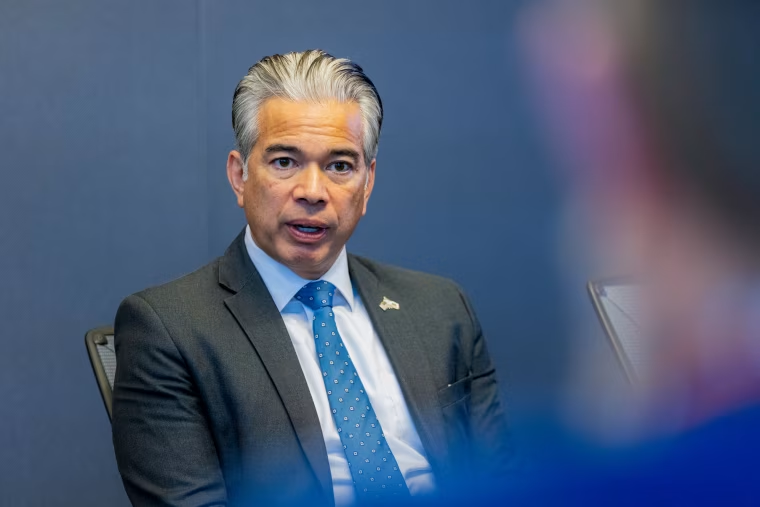
The California Attorney General’s Office has announced a settlement agreement that resolves a significant legal challenge involving a proposed 0 billion merger between Paramount Skydance and Warner Bros. Discovery, effectively paving the way for this major transaction. This agreement comes after a lawsuit was filed in July by a coalition of 12 states, spearheaded by California Attorney General Rob Bonta, which argued that the merger would severely undermine competition in the entertainment sector.
The merger aims to consolidate two historic filmmaking enterprises—Paramount and Warner Bros.—as well as their respective streaming services, Paramount+ and HBO Max. Under the leadership of David Ellison, a notable figure in the industry, the merged entity intends to create a powerhouse that could reshape Hollywood’s landscape.
In accordance with the settlement, Paramount Skydance has committed to exclusively releasing 30 films annually for the first two years following the merger, increasing to 32 films each year for three subsequent years. Should it fail to meet these production targets, the company will incur penalties. Furthermore, the agreement mandates that the newly formed organization invest upwards of billion in U.S. film production.
As part of regulatory negotiations, Paramount has also agreed to create independent editorial boards that will oversee the operations of its news divisions, specifically CBS News and CNN. These provisions are designed to address concerns about potential conflicts of interest and competition suppression.
In parallel developments, the Writers’ Guild of America (WGA) reached its own settlement with Paramount, stipulating protections for writers at CBS News and financial contributions to health and pension funds. The merger’s critics within Hollywood have expressed ongoing reservations, asserting that further consolidation could jeopardize the creative workforce while fostering an environment that is unfriendly to smaller entities.
Both Paramount and Warner have seen their stock prices surge by over 10% in light of positive developments surrounding the deal. Notably, the states involved in the lawsuit had argued that the merger would violate antitrust laws by limiting competition across multiple avenues, including theatrical distribution and cable channel negotiations.
While Paramount has secured approvals from several regulatory bodies, including the U.S. Department of Justice and international authorities, many in the entertainment industry continue to voice dissent. Proponents of the merger argue that it will generate more diversity in storytelling and consumer choice. Critics, however, caution that such corporate amalgamations could stifle creativity and threaten the viability of the entertainment sector.
In summary, the settlement signifies a pivotal moment in the ongoing discourse surrounding corporate consolidation in Hollywood, as stakeholders navigate the intricate balance between competition, creativity, and corporate interests in a rapidly evolving media landscape.
#business #entertainment #politics #technology