
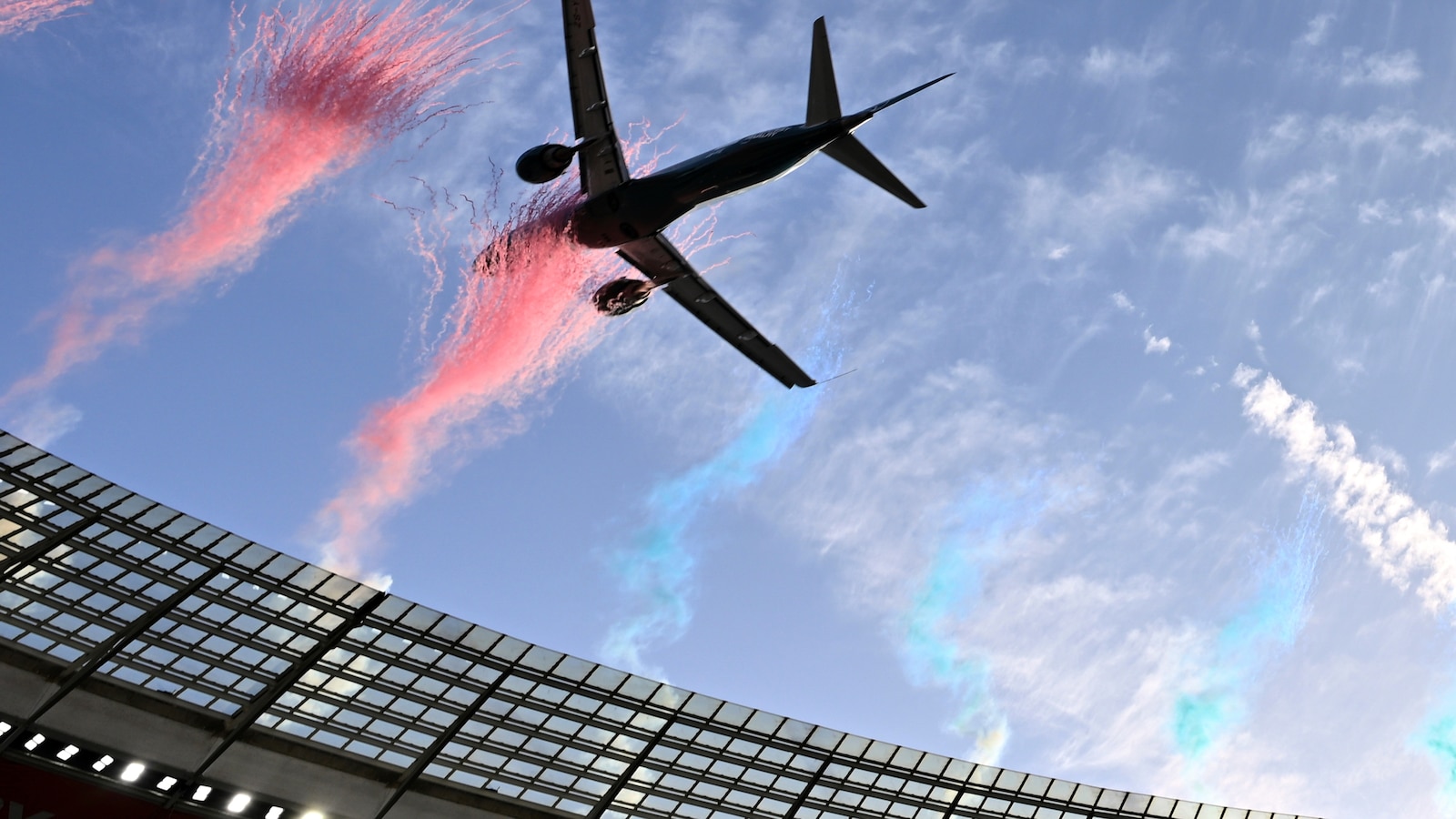
Passenger jets’ low flyby over South African stadium ignites safety concerns
In a recent display of aerial acrobatics, two Embraer jets operated by Airlink executed a low-altitude flyby over Cape Town Stadium before a highly anticipated rugby match, drawing both admiration and concern from spectators and experts alike. This event, which took place on a Saturday before the game between South Africa and New Zealand, attracted around 56,000 fans who erupted in cheers as the aircraft glided at a stunning height of approximately 41 to 46 feet above the stadium’s roof.
The flyby formed part of the pregame entertainment and was highlighted by a dramatic cloud of pink dust released from the stadium. Airlink, which maintains a sponsorship relationship with this rugby series, asserted that the aerial maneuver adhered strictly to safety protocols. The airline emphasized that the flyby was meticulously planned, executing the flight at a speed of around 150 knots (278 km/h), with a crew comprising three seasoned pilots operating as commander, co-pilot, and safety officer.
While the vast majority of attendees expressed enthusiasm for the performance, aviation experts raised significant concerns regarding the safety of such low-level operations. For instance, Chris Martinus, the president of the Aircraft Owners and Pilots Association South Africa, voiced discomfort with the narrow margins of error characteristic of low-altitude flights. He cautioned that any adverse event could severely limit pilot options at such heights, raising questions about potential risks.
Further scrutiny came from Keith Tonkin, an Australian aviation consultant, who pointed out that these passenger jets are not designed for low-flying applications. He warned that the precedent set by this flyby could invite similar requests from other organizations, potentially compromising safety in future events. The concern stems from the precarious nature of low-altitude flying, where turbulence or unexpected incidents, such as a bird strike, could endanger not just the aircraft but also the large crowd below.
In response to the safety apprehensions, Airlink reaffirmed its commitment to aviation standards, stating that data recorded indicated compliance with civil aviation regulations regarding speed and altitude. The airline has submitted flight data, including black box information, for review by the South African Civil Aviation Authority, which plans to release an assessment in the near future.
The incident sparked considerable debate within aviation circles over the appropriateness and implications of such audacious flight stunts in the context of public safety and regulatory standards. As South African rugby tradition embraces aerial displays, the future of such spectacles may hinge on the outcomes of ongoing discussions surrounding aviation safety.
#business #entertainment #technology


