
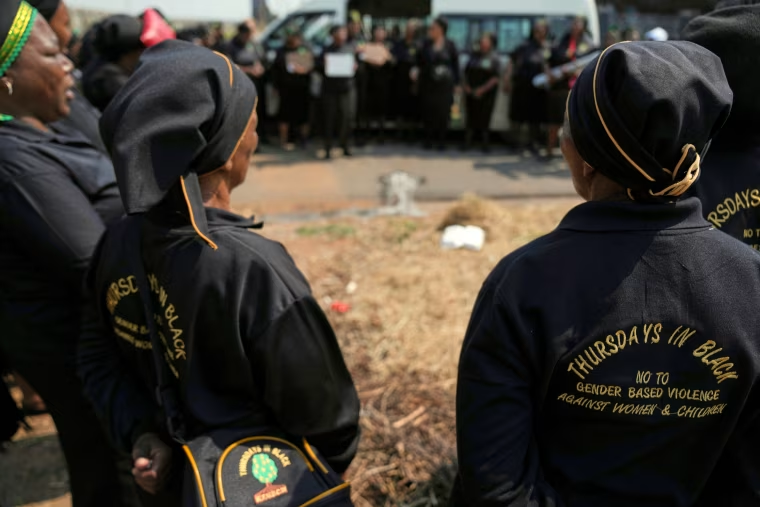
In the wake of a series of tragic killings that claimed the lives of nine women in Ekurhuleni, east of Johannesburg, South Africa, citizens organized memorial runs and protests this past week. The outpouring of sorrow and anger highlights a growing concern over gender-based violence in the nation, which many feel reflects the pervasive dangers women encounter daily.
The authorities discovered the bodies over the last two months, raising fears that these heinous acts are interconnected. Most of the victims were relatively young, in their 20s and 30s, with some discovered showing signs of violence and sexual assault. The unsettling nature of these events has intensified calls for accountability and systemic change.
During a memorial run that took place on Saturday, participants honored Elizabeth Moselakgomo, one of the slain women who disappeared while jogging. Attendees mourned her loss by lighting candles and carrying banners emblazoned with messages such as, “Enough. Stop Femicide.” This event, like many others across the country, served as a poignant reminder of the risks faced by women in South Africa.
Activist Lerato Lentsela articulated the pervasive fear surrounding everyday activities, stating that women feel unsafe not just during exercise but also in commonly frequented places such as post offices, restaurants, and even their own homes. This sentiment resonates deeply among many women, who have long contended that despite governmental awareness and public declarations regarding the rising tide of gender-based violence, little has been done to ensure their safety.
The tragic incidents have reignited broader discussions about the state of law enforcement in South Africa. In 2025, gender-based violence was officially declared a national disaster, prompting initiatives aimed at addressing the issue. However, numerous women have expressed skepticism regarding the efficacy of these initiatives, emphasizing that they seem inadequate in providing tangible improvements in their safety.
South African President Cyril Ramaphosa underscored the need for decisive action against violent crime, stating that no effort would be spared in uncovering the truth behind these cases. Nevertheless, challenges remain deeply rooted, as the police force is hampered by corruption and a scarcity of resources, leading to a strikingly low resolution rate for murder cases.
Community organizations like Women for Change are advocating for a reevaluation of policing strategies and urging authorities to prioritize the safety of women. Many activists have decried the frequent police suggestions that women should modify their behaviors to evade violence, instead calling for an end to the responsibility being shifted back onto victims. As the nation grapples with these profound issues, the demand for systemic change and meaningful engagement in safeguarding women’s rights remains more urgent than ever.