The Oil Squeeze Tightens – Paul Krugman | Substack
Time is not on the world economy’s side

Still on vacation, but taking a brief vacation from the vacation to catch up on news and weigh in on something that is more important than Trump’s ballroom: the ongoing consequences of America’s disastrous war with Iran.
The Strait of Hormuz remains closed. Iran has made a proposal for reopening, but Trump, according to the New York Times, is “dissatisfied” with the plan, among other things because “accepting it could appear to deny Mr. Trump a victory.” Indeed: Claiming victory tends to be hard when you’ve lost, badly.
How long will it take before Trump accepts the reality that he doesn’t have the cards, that in the end his Iran venture will be resolved in a way that leaves Iran stronger and America weaker than before the war? Markets are growing increasingly pessimistic. Here’s the price of Brent crude:
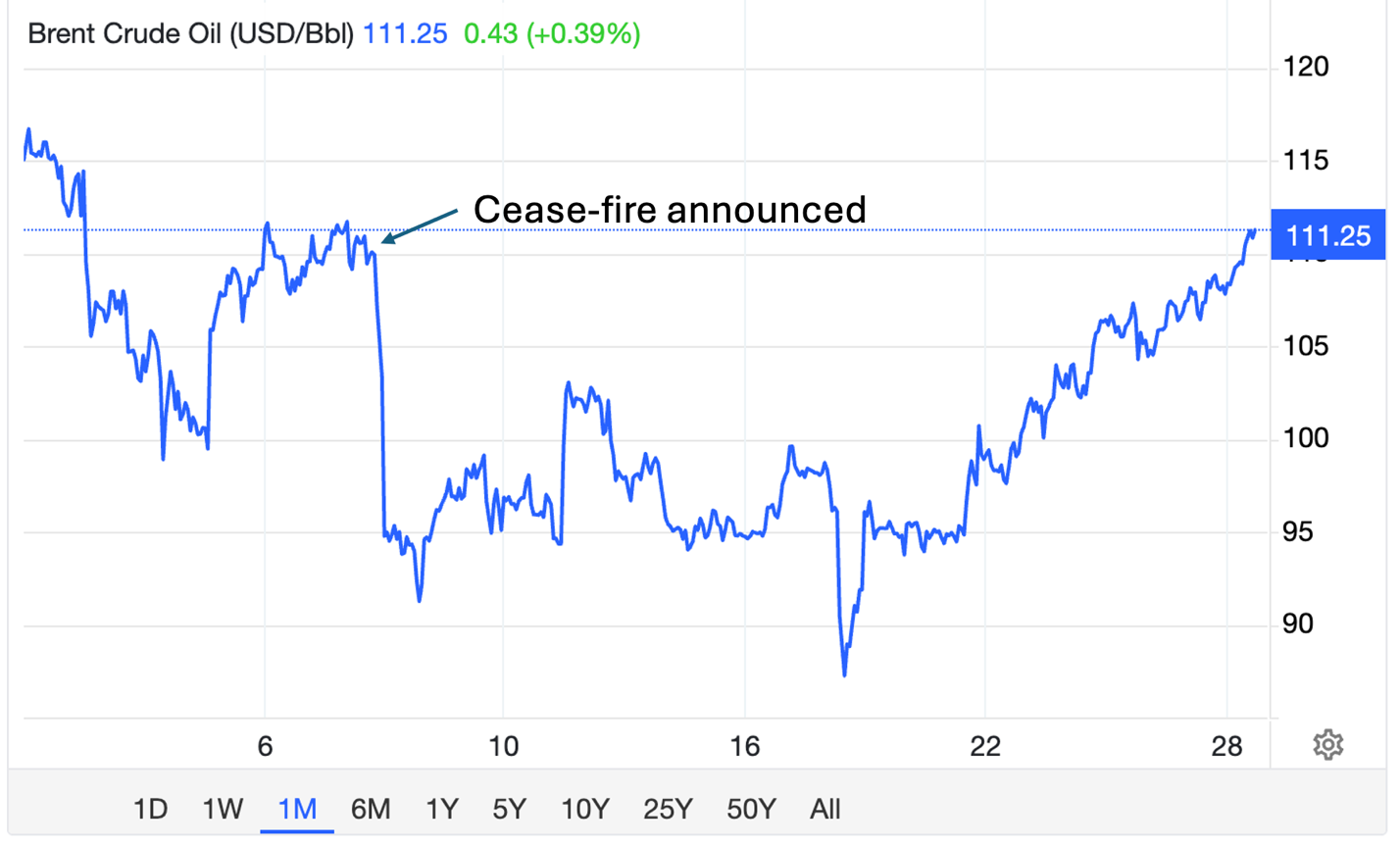
The price drop after the ceasefire was announced has been almost completely reversed. And the longer reality denial lasts, the worse it will get.
As I argued a week ago, ultimately the energy crisis is physical: if the flow of oil from the Persian Gulf remains deeply depressed, at some point there has to be enough “demand destruction” to bring consumption down to match the reduced supply.
That process has barely begun. According to a recent note from Goldman Sachs (no link), here’s what is going on with world oil supply and demand:
Extreme inventory draws. We estimate that 14.5mb/d of Persian Gulf crude production losses are driving global oil inventories to draw at a record 11-12mb/d pace in April.
Translation: So far, despite much higher oil prices, demand for oil has fallen by only a fraction of the loss of supply. Instead, the world economy is running by taking oil out of storage. Since there’s only so much oil in the tanks, this can’t go on. So if the Strait doesn’t reopen, prices will have to soar high enough — and inflict sufficient economic damage — to destroy another 11 or more million barrels a day of demand. That’s a lot.
But Trump is talking about his ballroom.
This may seem weird, but it makes sense if you view it psychologically. Trump is clearly dissociating. His fragile sense of self-worth depends on constantly believing that he’s a winner while others are losers. Now he’s faced with the reality that he, more or less single-handedly, led America to humiliating strategic defeat.
He’s losing on other fronts, too. The fall of Viktor Orban was a big defeat for Trump. So, I’d argue, is the survival of Ukraine, which appears to be gradually gaining the upper hand over Putin’s Russia despite Trump’s attempt to betray our erstwhile ally.
So Trump is coping by tuning out the war he started, focusing on a grandiose, ego-boosting project that lets him assert dominance over servile Republicans and businesses that are footing the bill.
But while he may be done with his war, the war isn’t done with him — or with the world economy. And the longer his fugue state lasts, the worse the damage will get.