There’s a lot of hype about Chinese EVs—is any of it true? – Ars Technica
And why wouldn’t people want them? The average price of a new vehicle in the US in 2025 rose to $50,326 by year’s end. That’s up from ~$40,000 in 2020 and $35,000 in 2015. (Those numbers are for the mean; the medians are slightly less, but the difference is not great.)
Despite the sharp increase in 2020 caused by the pandemic and its associated supply shortages, average sales prices appear to have risen relatively linearly over time, according to Cox Automotive’s data set. And according to Federal Reserve data, wages have also grown steadily (much of it in the lower four quintiles during the Biden administration).
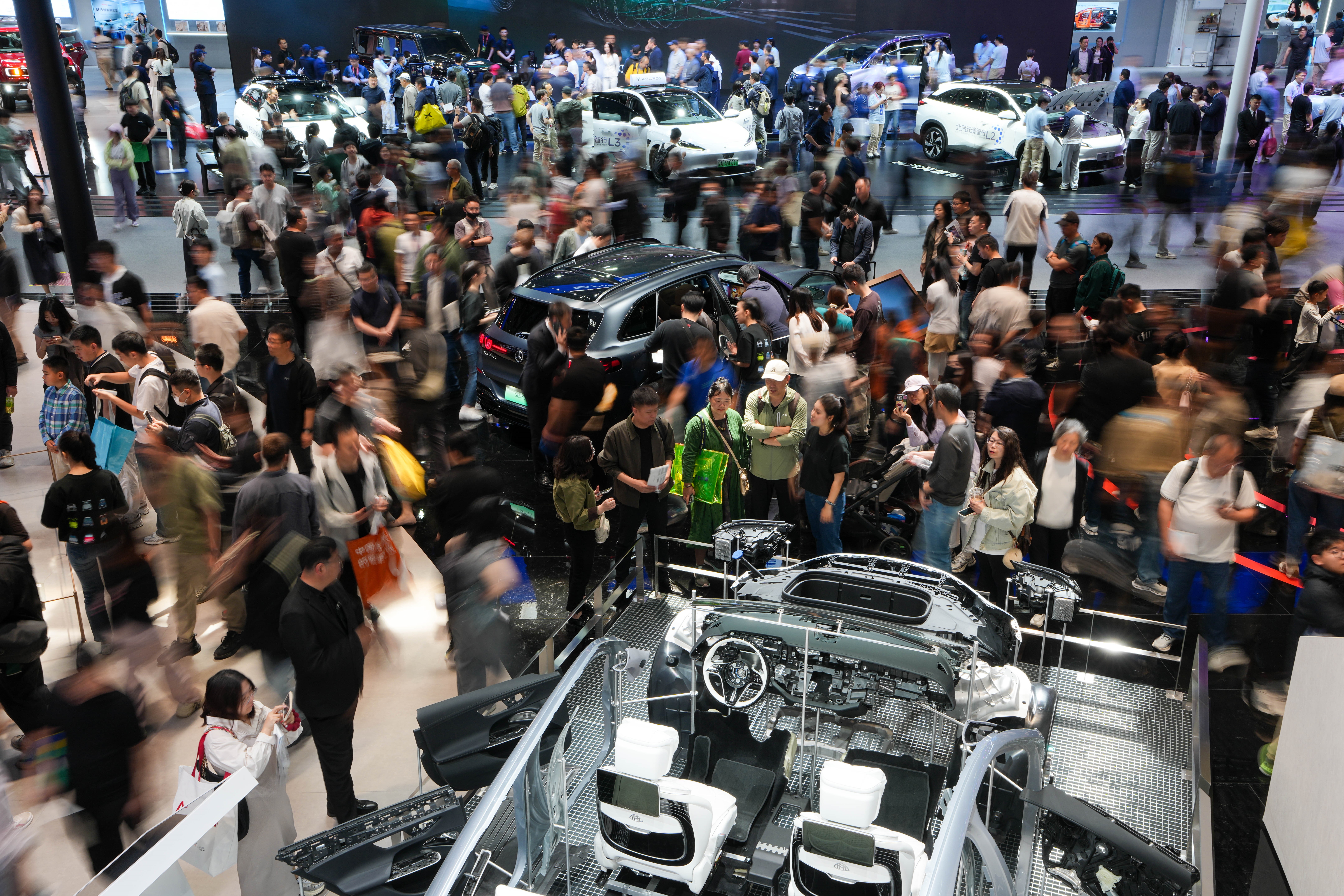
Credit:
Ju Huanzong/Xinhua via Getty Images
The auto show might be dead in the US and Europe, but it’s apparently alive and kicking in China.
Credit:
Ju Huanzong/Xinhua via Getty Images
But for most of the 2010s, interest rates were zero or close to it; today, they very much are not. So financed purchases feel even more expensive than the raw inflation statistics would suggest. And it’s exacerbating as, according to the Fed, American car buyers are borrowing twice as much as they did in 2009, and for longer. Consumer advice orgs like Edmunds might suggest a 60-month loan, but many car buyers are now financing vehicles over 72 or 84 months to keep their monthly payments down.
No wonder buying a car feels increasingly unaffordable.
Some of the concerns are legitimate
Much of the opposition from lawmakers has been framed in terms of protecting domestic jobs. These are not entirely spurious fears: 952,000 people work in motor vehicle and parts manufacturing in the US, according to the Bureau of Labor Statistics. Some work for Ford and General Motors and the cluster of Stellantis brands we still think of as domestic. But European, Japanese, and Korean automakers also employ tens of thousands of workers, not to mention Tesla and the other startups. There’s even more work for suppliers further up the parts chain.