
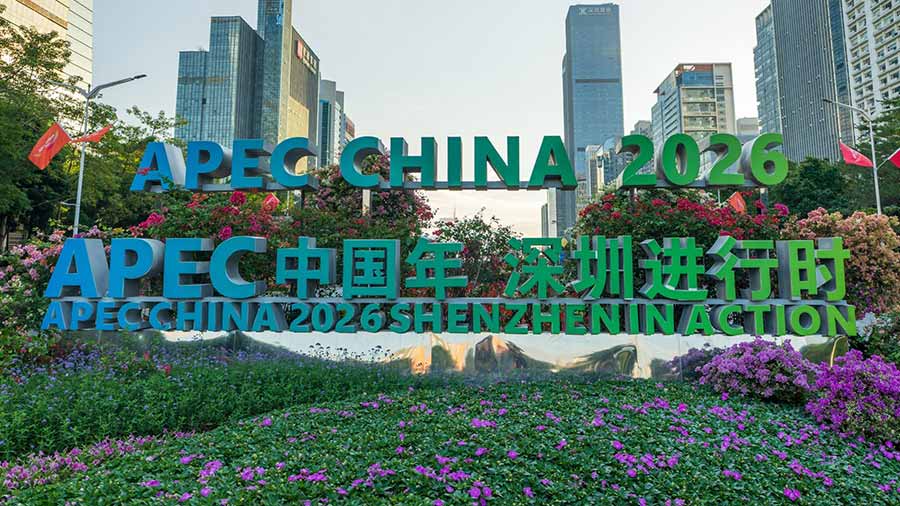
Leaders of APEC’s 21 member economies convened in Shenzhen, China, from November 18 to 19, 2026, marking the first APEC summit hosted in the city and China’s first time as host in 12 years. The summit included a significant gathering of business and political representatives, with over 2,000 attendees, including executives from 115 Fortune Global 500 companies. The United States had the largest foreign representation.
Xi Jinping and Donald Trump Discuss Cooperation
During the leaders’ meeting on November 19, Chinese President Xi Jinping chaired discussions and held a bilateral meeting with U.S. President Donald Trump. They also participated in a trilateral meeting with Russian President Vladimir Putin, where they issued a four-point Peace Declaration focused on increasing the production and supply of refined petroleum products. However, the declaration lacked specific volumes or timelines, leaving uncertainties regarding its impact on fuel costs amid ongoing tensions in the Strait of Hormuz.
In his keynote address at the APEC CEO Summit, Xi announced that China would contribute USD 20 million to APEC practical cooperation and establish a Center for Asia-Pacific Community Studies in Shenzhen. He emphasized commitments to enhance market access, cut tariffs, and reform regulations to create a more predictable environment for foreign investors. Xi also called for cooperation towards a Free Trade Area of the Asia-Pacific (FTAAP) and reaffirmed support for the WTO-centered multilateral trading system.
Trump’s Remarks on Trade and AI
In his remarks at the summit, Trump highlighted the strength of the U.S. economy and anticipated more trade agreements in the near future. He noted that inflation in the U.S. had dropped to below 2 percent in recent months. Trump also addressed the importance of artificial intelligence (AI), referring to it as “super intelligence,” and stressed the need for careful management of AI developments without imposing restrictive regulations.
Kristalina Georgieva, managing director of the International Monetary Fund, noted that 2026 marked the first year AI significantly impacted global growth. She warned that rising energy prices, partly due to Middle Eastern conflicts, and the demand for data centers could fuel inflation and lead some nations to tighten monetary policies. Georgieva also pointed out that global public debt was approaching 100 percent of GDP, the highest level since World War II.
Background on APEC and Its Significance
The Asia-Pacific Economic Cooperation (APEC) is a forum for 21 economies that collectively account for over 60 percent of global economic activity and approximately 40 percent of the world’s population. The summit serves as a platform for leaders to discuss economic cooperation and trade policies, addressing challenges and opportunities in the region.
The outcomes from this year’s summit included the APEC CEO Summit Shenzhen Initiative, which proposed advancements in AI applications, zero-carbon transport, and sustainable agriculture. However, the Shenzhen Outlook, a non-binding statement adopted by leaders, did not reference the WTO or the multilateral trading system, indicating that the practical effects of APEC commitments will depend on individual economies’ implementations.
Following the summit, no new tariff rates were announced, and the truce established in Busan in October 2025 remains in effect until January 10, 2027. The next steps for U.S.-China trade relations remain unclear as both leaders concluded their discussions without specific new agreements.