
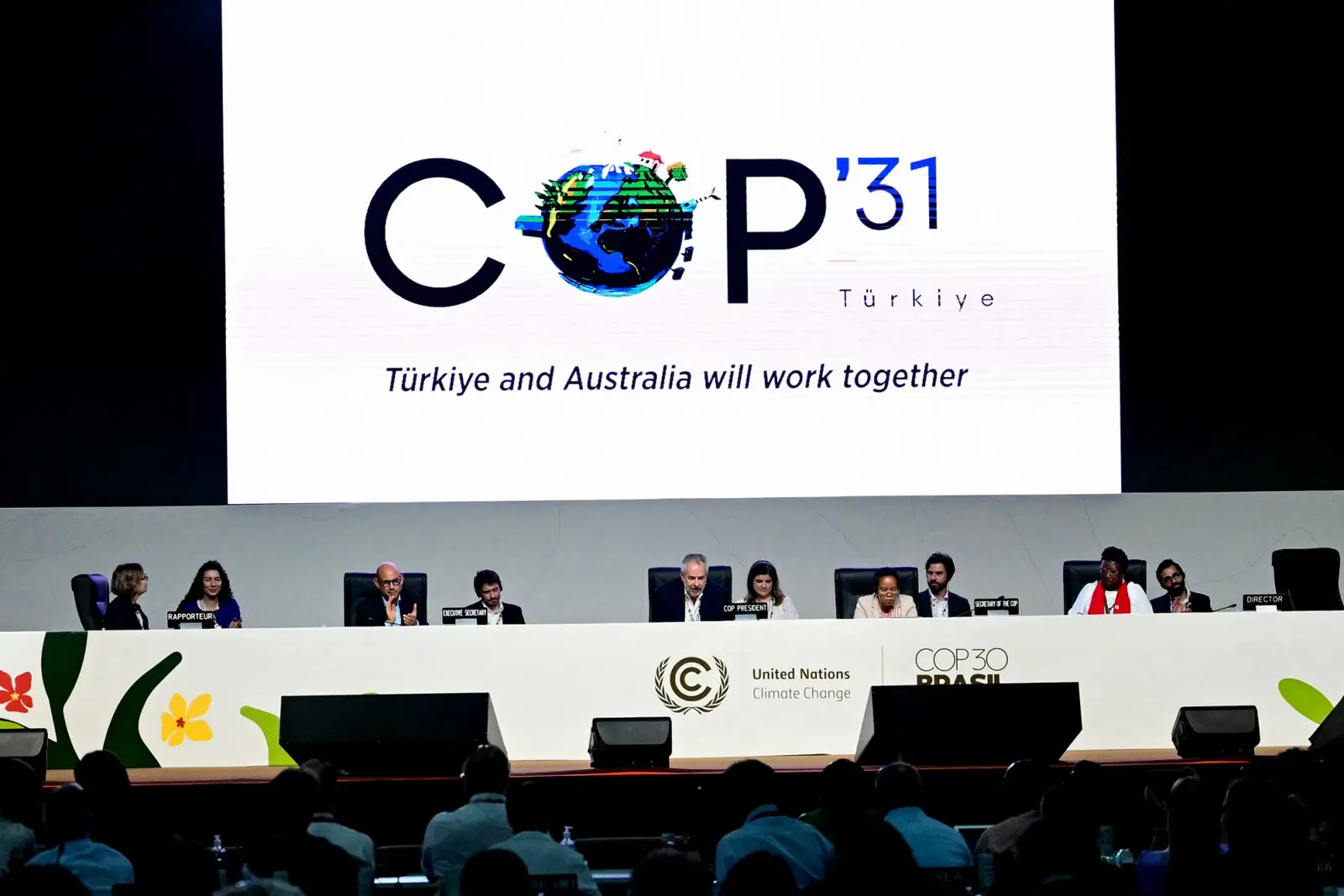
During the COP31 climate summit in Antalya, Türkiye, on November 9, 2026, various stakeholders announced new commitments aimed at accelerating electrification and transitioning away from fossil fuels. The Global Electrification Initiative, which seeks to increase electricity’s share of final energy consumption from approximately 23 percent to 35 percent by 2035, has garnered support from 180 companies with a combined annual revenue of USD 1.69 trillion, including major firms like Volvo, Uber, IKEA, and Siemens. COP31 President Murat Kurum emphasized that electrification is vital for enhancing energy security, reducing emissions, and fostering economic growth, especially given the risks associated with reliance on imported fossil fuels.
Investment Commitments and Infrastructure Developments
The Utilities for Net Zero Alliance (UNEZA) announced plans to boost annual investments in electricity grids, renewable energy, and storage to at least USD 156 billion. The alliance reported that over 21,000 kilometers of new electricity grids were constructed in 2025, marking a 50 percent increase from the previous year. Additionally, 13 green freight corridors covering over 29,000 kilometers are currently being developed across six continents, surpassing the original target of ten routes by 2026.
Electrify Now Finance Coalition and Political Tensions
The summit also saw the launch of the Electrify Now Finance Coalition, which aims to mobilize investments for electrification projects in developing countries, with the World Bank and African Development Bank as its inaugural co-chairs in 2027. However, tensions arose due to Türkiye’s fossil fuel ambitions, highlighted by President Recep Tayyip Erdoğan’s announcement of two new oilfields in the Gabar mountains, estimated to contain 135 million barrels of oil. Production began in October, and these fields are projected to increase regional oil output by 30 percent. This development contrasts with calls from UN Secretary-General António Guterres and UN climate chief Simon Stiell for a stronger commitment to transitioning away from fossil fuels, despite the initiative not being on COP31’s official agenda.
Scientific Assessment of Global Emissions
A scientific assessment presented at the summit indicated that global carbon dioxide emissions from fossil fuels are expected to remain relatively stable in 2026, with a projected decline of 0.4 percent compared to 2025. Researchers warned that this slight reduction could be temporary, particularly as emissions from deforestation and land-use changes continue to rise.