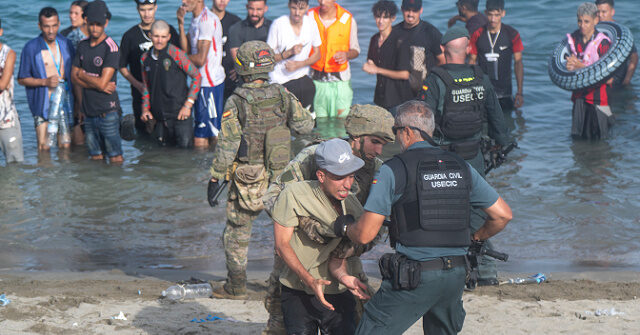
Spanish Minister Blames Israel for Escalating Ceuta Migrant Crisis
The recent conflict over Spain’s handling of a significant migrant crisis has heightened tensions between Spain and Israel, reflecting broader geopolitical concerns. A media source reported that Spanish Transport Minister Óscar Puente’s response to criticism from Israeli U.N. Ambassador Danny Danon has fueled a wave of speculation on social media, with some users alleging that Israel is instrumental in the migrant surge affecting Spain’s enclave of Ceuta, located in North Africa. This situation has emerged following an unprecedented influx of migrants crossing from Morocco, intensifying already strained diplomatic relations between Jerusalem and Madrid.
The discord began when Danon condemned Spain’s declaration of a state of emergency and the deployment of military forces to Ceuta, which had experienced one of the most severe migration crises in recent histories, with approximately 49,000 migrants arriving within a single day. He accused Spain of hypocrisy, suggesting that the Spanish government, which often criticizes Israel, should address its colonial presence in Africa, particularly referencing Ceuta and Melilla.
Puente’s reaction to Danon’s comments—merely reposting them along with a vague remark—has incited speculation that he is endorsing theories assigning blame to Israel for the migration influx. Various Spanish politicians and commentators have alleged that Israel may be retaliating against Spain for its stance on the ongoing conflict between Israel and Hamas, although these claims have not been substantiated by evidence.
In response to the escalating situation, Israel’s Foreign Ministry swiftly distanced itself from Danon’s comments while emphasizing that it is closely monitoring developments in Ceuta. This diplomatic spat has surfaced amidst a backdrop of increasing criticism from within Spain and other European nations regarding the government’s handling of the migration crisis. Political figures like Santiago Abascal, leader of the opposition Vox party, referred to the migrant surge as an ‘invasion’, while Italian officials expressed concerns about the implication for European borders, suggesting possible repercussions for Spain’s participation in the Schengen Area.
The ongoing crisis not only underscores Spain’s domestic challenges but also highlights the intricate interplay between national security, immigration policy, and international relations. As the situation evolves, it is poised to impact diplomatic interactions between Europe and the Middle East, particularly in light of Spain’s critical stance towards Israeli military actions in Gaza.
#politics #business