World Cup 2026 Sees Three Red Cards Raising Concerns Over Referee Toughness
The 2026 World Cup has kicked off with unexpected fervor as three red cards were issued during the opening match between Mexico and South Africa, which Mexico won 2-0. This level of disciplinary action in a World Cup match takes many fans and experts back to a time when such incidents were commonplace in football. Notably, this marks the first time since 2006 that three players have been sent off in a single World Cup match.
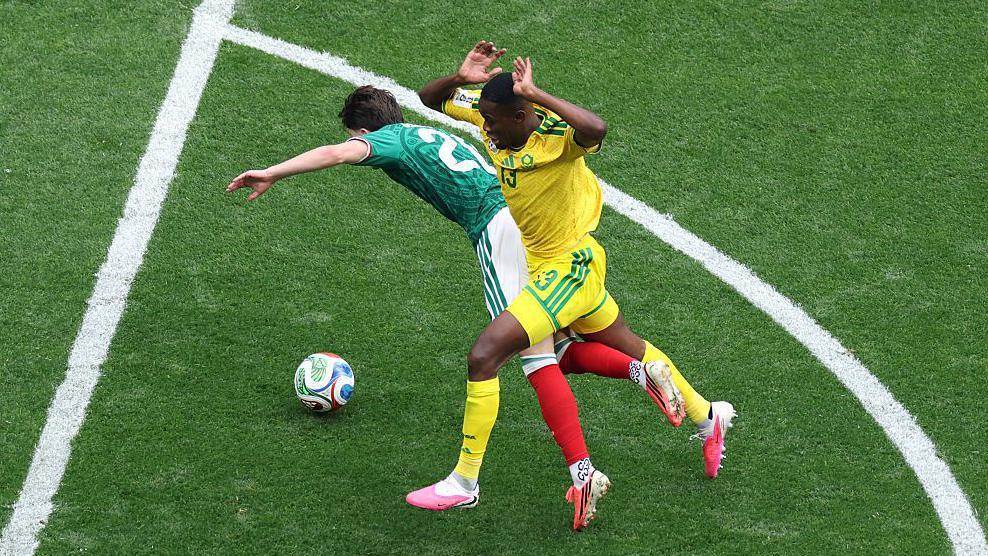
The first dismissal came when South African player Yaya Sithole fouled Mexico’s Brian Gutierrez as he was nearly through on goal, a situation that justified the referee’s decision. Further exacerbating the South African team’s woes, Themba Zwane received a red card following a video assistant referee (VAR) review, a controversial call that sparked debate among commentators and fans alike. Sunderland’s VAR setup was instructed to identify signs of aggressive behavior. In this instance, Zwane appeared to have engaged in a tussle with Gutierrez, but opinions on the severity of the incident varied, leading many to question if the red card was warranted.
The third red card was issued to Mexico’s Cesar Montes for denying an obvious goal-scoring opportunity. Each card issued has reignited discussions on the evolving nature of refereeing standards and the potential implications for the tournament’s integrity. This early spate of red cards is particularly interesting as the 2018 and 2022 World Cups saw just four red cards total, suggesting a shift in how officials interpret and enforce rules this time around.
Pierluigi Collina, FIFA’s head of referees, has emphasized a philosophy focused on justice in officiating, promoting the notion that players should remain on the field unless their actions are indisputably deserving of a red card. This sentiment seems to have been put to the test early in this World Cup, drawing mixed reactions that could influence how games unfold in the coming weeks.
As the tournament progresses, anticipation grows regarding whether the current wave of strict officiating is an anomaly or indicative of a broader trend. Fans and analysts alike will be keenly observing the decisions made on the pitch, weighing the balance between maintaining fair play and ensuring an entertaining spectacle on the world stage.
#business #politics #entertainment #technology