
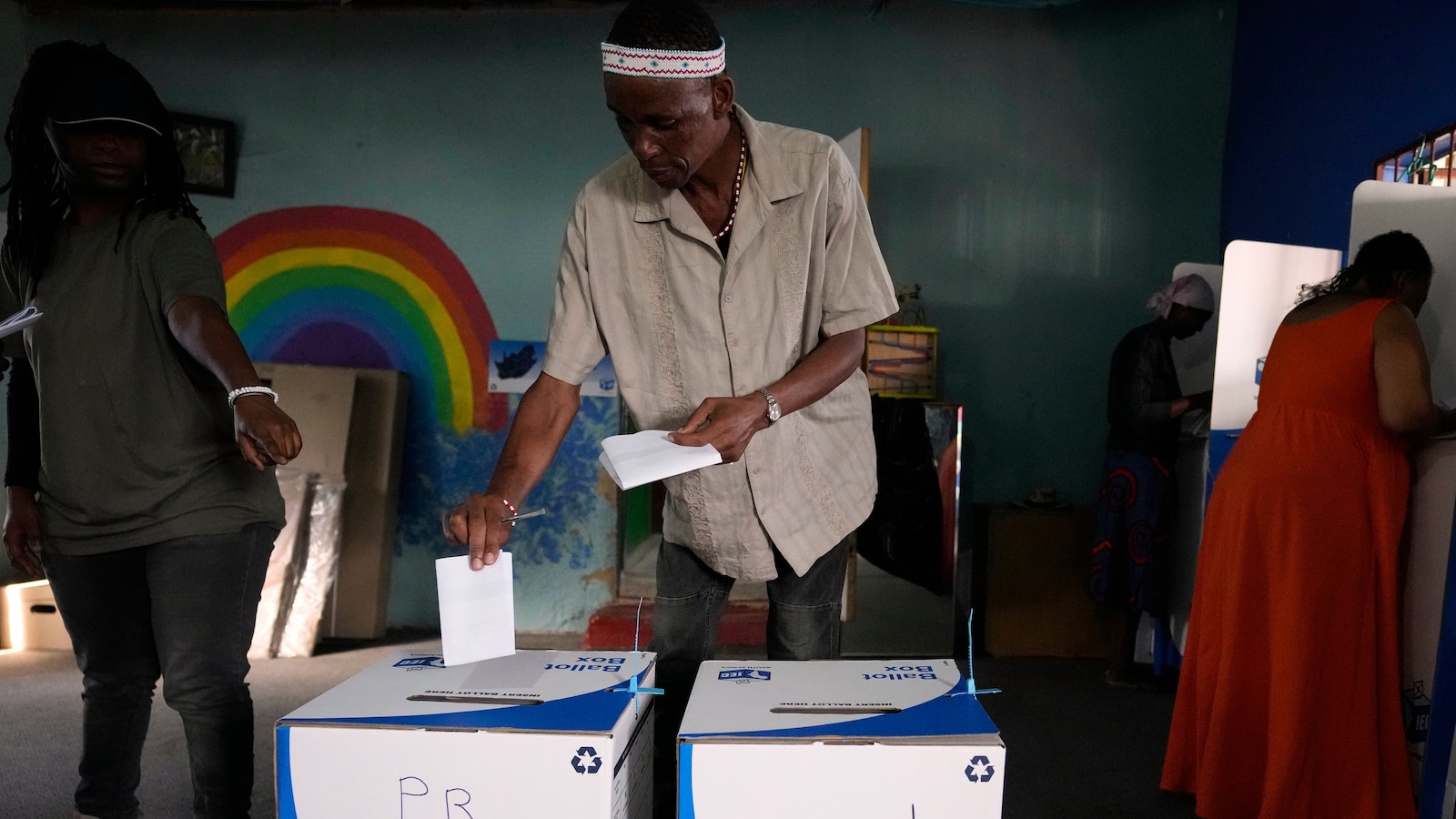
South Africa is engaging in local elections that represent a critical moment for the African National Congress (ANC), the party that has led the nation since the end of apartheid in 1994. As voters go to the polls, they are determining leadership across eight major city municipalities, along with 44 district councils and 205 local councils. The election, taking place Wednesday, is anticipated to serve as a significant barometer of the ANC’s waning popularity, which has been on a steady decline for the past decade.
President Cyril Ramaphosa characterized the voter turnout as historic and noteworthy, reporting an impressive mobilization of citizens eager to participate in the democratic process. Ramaphosa, who cast his own ballot in Johannesburg, remarked on the sight of long lines at polling stations, emphasizing the significance of such widespread civic engagement.
A total of 546 political parties are contesting for positions in this election, indicative of a vibrant, albeit complex, political landscape. Many voters voiced their motivations for participating, citing deteriorating basic services and infrastructure as critical issues. For instance, in Alexandra township, where the streets are marred by potholes and inadequate waste management, residents expressed their frustrations and hopes for change through their ballots.
In the southeastern city of Ekurhuleni, residents reported being deprived of a reliable water supply in the days leading up to the election. The discontent surrounding local governance is palpable, as voters like 21-year-old Karabo Mogano and 65-year-old Raymond Selepe articulated their desire for improved living conditions. These sentiments reflect a growing urgency for effective leadership that can address the pressing challenges facing communities.
The ANC’s losses in previous elections, including a decline below 50% of the vote in 2021 for the first time since apartheid, have necessitated a coalition with the Democratic Alliance and other parties. This shifting political dynamic may further complicate election results at the local level, as the ANC, despite its current coalition status, finds itself competing against both familiar and new opponents. Notably, the MK Party, formed by former president Jacob Zuma, enters this electoral contest with a surprising degree of influence following its strong performance in national elections.
Polling stations are set to close at 9 p.m. on Wednesday, and the outcomes will shed light on the evolving political landscape in South Africa, with implications for governance and public service in the months to come.

